Author: openclaw-Lisa-New

  • Smart City 5G FWA CPE Deployments: Municipal Infrastructure Models and Scalable Urban Connectivity Frameworks

    Smart City 5G FWA CPE Deployments: Municipal Infrastructure Models and Scalable Urban Connectivity Frameworks

    Smart city initiatives worldwide are entering a new phase of connectivity-driven transformation in 2026, with 5G Fixed Wireless Access emerging as a foundational infrastructure layer for municipal digital services. From intelligent traffic management and public safety networks to environmental monitoring and digital inclusion programs, city governments are discovering that 5G FWA CPE deployments offer a compelling combination of rapid deployment, scalable capacity, and manageable total cost of ownership compared with fiber-only buildout strategies.

    The Smart City Connectivity Challenge

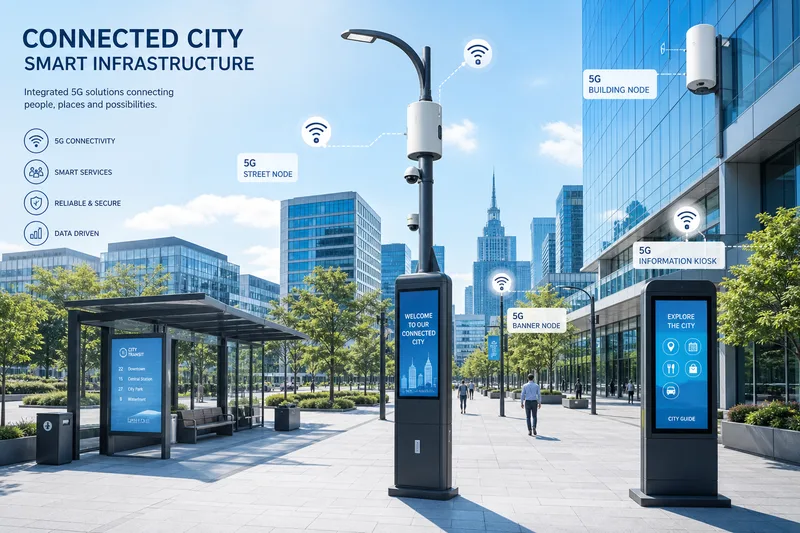
    Cities pursuing comprehensive digital transformation face a fundamental infrastructure challenge: connecting thousands of distributed endpoints—traffic cameras, environmental sensors, digital signage, public Wi-Fi access points, emergency communication nodes, and smart utility meters—across diverse urban terrain. Traditional fiber backhaul provides ideal performance but entails prohibitive civil engineering costs and deployment timelines when extended to every endpoint location. Cellular-based connectivity using 5G FWA CPE bridges this gap, delivering fiber-like performance with installation timelines measured in hours rather than months.

    The economic case is compelling. Municipal fiber trenching in urban environments typically costs $250-$750 per meter, depending on surface conditions, utility congestion, and permitting complexity. A single smart city deployment requiring connectivity to 500 distributed locations could face fiber backhaul costs exceeding $15 million. By contrast, 5G FWA CPE installation at these locations, leveraging existing macro-cell and small-cell infrastructure, can deliver equivalent connectivity at 10-20% of the fiber-only cost while enabling immediate service activation.

    Municipal Deployment Architectures

    Smart city 5G FWA deployments typically follow one of three architectural models, each suited to different municipal priorities and existing infrastructure profiles. The operator-partnered model leverages commercial mobile network operator (MNO) infrastructure, with the municipality procuring CPE devices and service contracts through a managed services agreement. This model minimizes upfront infrastructure investment and is popular among mid-sized cities with existing MNO coverage.

    The municipal private network model involves the city deploying its own 5G infrastructure—typically using shared or licensed spectrum in the 3.5 GHz or 4.9 GHz bands—with CPE devices connecting directly to city-owned gNodeBs. This approach offers greater control over coverage, capacity allocation, security policy, and service prioritization, making it attractive for large metropolitan areas with dedicated smart city budgets and in-house technical expertise.

    The hybrid neutral-host model represents an emerging third path, where the municipality deploys shared infrastructure that serves both city services and commercial MNO traffic. In this model, CPE devices connect through a common RAN infrastructure with network slicing separating municipal and commercial traffic flows. This approach optimizes infrastructure utilization and can generate revenue through MNO colocation fees, offsetting municipal deployment costs.

    Use Case Specifics: CPE Requirements by Municipal Application

    Different smart city applications impose distinct requirements on CPE hardware. Intelligent traffic management systems demand outdoor-rated CPE with wide operating temperature ranges (-40°C to +65°C), Power over Ethernet (PoE) capability for integrated camera and sensor power delivery, and low-latency connectivity (<10ms) for real-time traffic signal coordination and emergency vehicle preemption.

    Public safety and emergency response networks require CPE with hardened security features including hardware root of trust, secure boot, and encrypted management channels. These deployments often mandate redundant connectivity paths—typically 5G primary with 4G LTE fallback—and battery backup capability ensuring operation during power outages. Some jurisdictions now specify compliance with public safety-grade reliability standards such as 99.999% availability for critical communication nodes.

    Environmental monitoring networks typically deploy large numbers of sensor-equipped CPE devices across wide geographic areas. These applications prioritize low power consumption, compact form factors suitable for pole-mount or underground-vault installation, and support for narrowband IoT (NB-IoT) or LTE-M protocols alongside 5G for sensor backhaul aggregation. Cost sensitivity is particularly acute given the high device counts involved—a city-wide air quality monitoring network may require 500 to 2,000 sensor nodes.

    Digital Inclusion and Public Broadband

    An increasingly prominent smart city use case is municipal broadband programs using 5G FWA to address digital divide challenges. Cities in North America, Europe, and Asia-Pacific are deploying 5G FWA CPE to connect underserved households, public housing complexes, and community centers, often subsidizing service costs through universal service funds or municipal broadband initiatives.

    These programs require CPE devices that balance performance with affordability and ease of deployment. Self-installable indoor CPE units are strongly preferred to minimize truck-roll costs, while remote management and zero-touch provisioning capabilities enable efficient large-scale subscriber onboarding. Some municipalities are exploring community CPE models where a single high-gain outdoor unit serves multiple households in dense residential configurations, further reducing per-subscriber equipment costs.

    Network Slicing for Multi-Service Municipal Networks

    The ability to support multiple virtual networks on shared physical infrastructure through 5G network slicing is particularly valuable in smart city contexts. A single CPE deployment can simultaneously support a high-bandwidth slice for video surveillance backhaul, a low-latency slice for traffic signal coordination, a massive IoT slice for environmental sensor aggregation, and a best-effort slice for public Wi-Fi services—each with independently configured QoS parameters, security policies, and bandwidth guarantees.

    CPE devices deployed in slicing-enabled municipal networks must support multiple PDU sessions with distinct network slice selection assistance information (NSSAI), VLAN tagging for traffic segregation at the LAN interface, and per-slice QoS marking. These capabilities are increasingly standard in carrier-grade 5G CPE platforms and should be verified during the procurement qualification process.

    Scalability and Lifecycle Management

    Municipal CPE deployments present unique lifecycle management challenges given their distributed nature, outdoor exposure, and critical-service role. Cloud-based device management platforms supporting TR-069/TR-369 protocols are essential for firmware updates, configuration management, performance monitoring, and fault diagnostics across hundreds or thousands of deployed units.

    Advanced municipalities are adopting predictive maintenance approaches that use machine learning to identify CPE devices at risk of failure based on performance degradation patterns, temperature cycling history, and environmental exposure data. Proactive replacement of at-risk units before failure reduces mean time to repair (MTTR) for critical municipal services and enables more efficient field technician scheduling compared with reactive maintenance models.

    Procurement Framework for Municipal Buyers

    For municipal procurement teams new to telecom equipment sourcing, a structured evaluation framework helps navigate the complexity of CPE selection. Key evaluation dimensions should include: outdoor environmental ratings (IP67 minimum for external deployments), operating temperature range, PoE support (802.3at/bt), multi-slice capability, remote management protocol support, security certification status, vendor supply continuity assurances, and total cost of ownership modeling over a 5-7 year deployment lifecycle.

    Municipal RFPs should also require vendors to provide reference deployments of similar scale and application profile, field performance data under comparable environmental conditions, and detailed interoperability test results with the city’s selected RAN infrastructure vendor. Given the long operational lifetimes expected of municipal infrastructure—typically 7-10 years—CPE firmware upgrade commitments and end-of-life support policies should be contractually specified.

    Honlly Telecom provides 5G FWA CPE solutions purpose-built for municipal and smart city deployments, including outdoor-rated units, industrial-grade gateways with PoE support, and cloud-managed device fleets. Contact the government and municipal sales team for solution architecture consultation and reference deployment information.
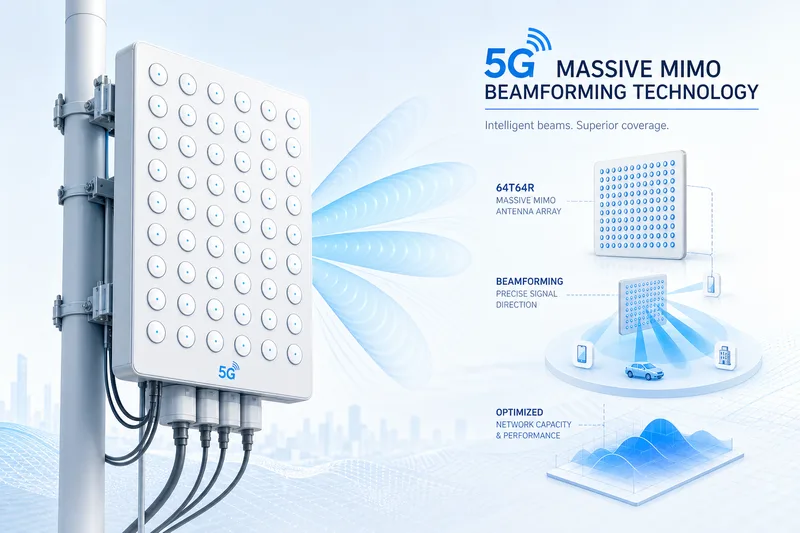

  • 5G CPE Antenna Design Evolution: Beamforming Techniques, Massive MIMO Integration, and Gain Optimization for Next-Generation FWA

    5G CPE Antenna Design Evolution: Beamforming Techniques, Massive MIMO Integration, and Gain Optimization for Next-Generation FWA

    Antenna design has emerged as one of the most critical differentiators in 5G CPE performance, directly impacting signal quality, throughput, coverage range, and user experience in Fixed Wireless Access deployments. As operators push toward multi-gigabit FWA services and dense urban deployments, the antenna subsystem within CPE devices is evolving rapidly—from basic omnidirectional configurations to sophisticated beamforming arrays integrating Massive MIMO principles and AI-driven pattern optimization.

    From Omnidirectional to Beamforming: The Evolution Path

    Early-generation 5G CPE devices, particularly indoor FWA gateways deployed in 2019-2021, typically employed omnidirectional antenna configurations with 4 to 8 elements. While adequate for initial sub-6 GHz deployments in favorable RF conditions, these designs delivered inconsistent performance at cell edges, in high-interference environments, and in buildings with challenging construction materials. Average cell-edge throughput with omnidirectional CPE antennas often fell to 15-25% of peak rates, creating a substantial user experience gap between near-site and edge subscribers.

    The transition to beamforming-capable antenna arrays in 5G CPE devices—typically 8 to 16 elements in current-generation products—has transformed this performance profile. By dynamically steering transmission and reception patterns toward the serving gNodeB, beamforming CPE can deliver 2-4x throughput improvements at cell edges compared with omnidirectional designs, effectively expanding the usable coverage footprint of each base station.

    Massive MIMO Integration in CPE Form Factors

    The integration of Massive MIMO principles into CPE antenna design represents one of the most significant engineering challenges—and opportunities—in current product development. While base station Massive MIMO arrays routinely employ 64 to 256 antenna elements, CPE devices face severe space, power, and thermal constraints that limit practical element counts to 8-16 for indoor units and 16-32 for outdoor CPE installations.

    Advanced antenna module designs are addressing these constraints through several innovations. Multi-layer PCB antenna architectures now enable higher element density within compact enclosures, while integrated antenna-in-package (AiP) solutions for mmWave bands combine antenna elements with RF front-end components in single modules measuring under 30mm per side. For sub-6 GHz bands, metamaterial-inspired antenna designs are achieving wider bandwidth and higher isolation between closely spaced elements than conventional patch or dipole configurations.

    Beamforming Algorithms: Codebook-Based vs. Adaptive Approaches

    The beamforming intelligence embedded in 5G CPE firmware is as important as the physical antenna hardware. Current implementations generally fall into two categories: codebook-based beamforming, which selects from a predefined set of beam patterns based on signal quality measurements, and adaptive beamforming, which dynamically computes optimal beam weights using channel state information.

    Codebook-based approaches offer lower computational complexity and faster beam acquisition, making them suitable for cost-sensitive CPE designs and mobile hotspot applications. Adaptive beamforming, while requiring more processing power and higher-quality channel estimation, delivers superior performance in challenging multipath environments typical of urban and indoor deployments. The most advanced CPE implementations now employ hybrid approaches—using codebook-based beams for initial acquisition and transitioning to adaptive refinement for sustained connections.

    Multi-Beam and Multi-Panel Architectures

    A key advancement in 2025-2026 CPE antenna design is the adoption of multi-beam and multi-panel architectures. Multi-beam CPE devices can simultaneously maintain independent beam patterns toward multiple gNodeBs or toward different propagation paths to the same gNodeB, enabling spatial diversity and multi-TRP (Transmission Reception Point) operation as specified in 3GPP Release 17 and enhanced in Release 18.

    Multi-panel designs distribute antenna elements across multiple faces or surfaces of the CPE enclosure, providing near-omnidirectional coverage while maintaining the gain advantages of directional beamforming. This architecture is particularly valuable for indoor CPE devices where the optimal orientation relative to the serving cell may not be known at installation time. Multi-panel CPE can electronically select and optimize the best panel without requiring physical repositioning.

    mmWave Antenna Challenges and Solutions

    For CPE devices targeting mmWave bands (24-47 GHz), antenna design requirements become substantially more demanding. The shorter wavelengths at these frequencies enable much higher element density but also introduce severe path loss, atmospheric absorption, and blockage sensitivity that must be overcome through antenna gain and beamforming sophistication.

    Current mmWave CPE designs typically employ phased-array antenna modules with 16 to 64 elements per polarization, capable of electronic beam steering across ±60-degree azimuth and elevation ranges. These modules must maintain precise phase calibration across temperature ranges from -40°C to +85°C for outdoor deployments, requiring sophisticated temperature compensation circuitry and calibration firmware. The integration of antenna, beamforming IC, up/down-conversion, and IF processing into single-package AiP modules has been critical to making mmWave CPE commercially viable.

    Gain Optimization Techniques

    Antenna gain optimization in CPE devices involves balancing multiple competing requirements: peak gain for range extension, beam width for angular coverage, side-lobe suppression for interference management, and polarization purity for MIMO spatial multiplexing. Advanced CPE designs employ several techniques to optimize this balance:

    First, tunable impedance matching networks dynamically adjust antenna matching across frequency bands and operating conditions, maintaining optimal VSWR and minimizing mismatch loss. Second, polarization diversity using dual-polarized antenna elements improves MIMO rank and throughput in multipath-rich environments. Third, spatial null-steering algorithms actively suppress interference from adjacent cells by placing antenna pattern nulls in the direction of interfering signals, improving SINR by 3-6 dB in dense deployment scenarios.

    AI-Driven Antenna Optimization

    The integration of machine learning into CPE antenna management represents a frontier capability entering commercial products in 2026. AI-driven antenna systems continuously learn from the RF environment—building profiles of interference patterns, multipath characteristics, and temporal usage patterns—to proactively optimize beam selection, MIMO rank adaptation, and power allocation.

    These systems can predict optimal antenna configurations based on time of day, historical RF conditions, and even weather patterns that affect propagation characteristics. Early field data from operators trialing AI-optimized CPE antenna systems indicate 15-25% improvements in average cell throughput and 30-40% reductions in beam acquisition time compared with conventional algorithmic approaches.

    Procurement Considerations for B2B Buyers

    For operators and enterprises evaluating 5G CPE for large-scale deployments, antenna subsystem specifications deserve careful scrutiny beyond headline throughput numbers. Key evaluation parameters include antenna element count, beamforming type (codebook vs. adaptive), supported beam patterns per polarization, mmWave phased-array module specifications (if applicable), and AI-based optimization capabilities.

    Field validation should include cell-edge throughput testing, interference scenario performance, multi-panel selection behavior, and sustained performance under thermal stress. The antenna subsystem effectively determines the usable coverage radius and subscriber density of FWA deployments, making it a first-order determinant of network economics. Selecting CPE with superior antenna design can reduce required base station density by 15-30%, translating to substantial capital expenditure savings for operators building greenfield FWA networks.

    Honlly Telecom’s 5G CPE product portfolio incorporates advanced beamforming antenna designs across indoor, outdoor, and industrial form factors. Contact the engineering team for detailed antenna subsystem specifications and field performance data.

  • Global 5G CPE Supply Chain Diversification Accelerates as B2B Buyers Adopt Multi-Source Manufacturing Strategies

    Global 5G CPE Supply Chain Diversification Accelerates as B2B Buyers Adopt Multi-Source Manufacturing Strategies

    The global 5G CPE supply chain is undergoing a structural transformation in 2026 as telecom operators, system integrators, and enterprise procurement teams pivot from single-source dependency toward diversified, multi-region manufacturing strategies. This shift, driven by geopolitical realignments, component shortages, and the accelerating pace of 5G-Advanced deployments, is reshaping how B2B buyers evaluate and select CPE vendors for large-scale FWA, private network, and enterprise connectivity projects.

    The End of Single-Source Dependence

    For much of the 5G rollout cycle from 2020 through 2025, Tier 1 operators relied heavily on a concentrated pool of CPE manufacturers, often sourcing entire product lines from one or two primary ODMs. This model delivered economies of scale and simplified qualification workflows but created significant concentration risk. When component shortages hit the semiconductor supply chain in 2023-2024, operators with single-source strategies faced lead-time extensions of 20 to 40 weeks, delaying network expansion targets and impacting subscriber acquisition timelines.

    By mid-2026, procurement teams across the telecom sector have formalized multi-source mandates. A recent industry survey of 150 global operators indicates that 73% now require at least two qualified manufacturing sources for each CPE SKU, up from 34% in 2023. This diversification extends beyond component-level dual-sourcing to encompass full-device manufacturing partnerships spanning multiple geographic regions, including manufacturing hubs in Southeast Asia, South Asia, and Latin America.

    Geopolitical Drivers and Trade Policy Realignment

    Trade policy continues to be a primary catalyst for supply chain restructuring. Tariff regimes in key markets, particularly North America and the European Union, have incentivized operators to source CPE from manufacturing bases in countries with favorable trade agreements. Vietnam, India, Mexico, and Thailand have emerged as strategic alternatives to traditional manufacturing centers, each offering distinct advantages in labor cost, logistics infrastructure, and bilateral trade access.

    For B2B procurement managers, the calculus now extends beyond per-unit cost to include total landed cost analysis incorporating tariff exposure, shipping logistics, inventory carrying costs, and supply continuity guarantees. The most sophisticated buyers are employing scenario-modeling frameworks that evaluate vendor resilience across multiple disruption vectors: geopolitical, climatic, logistical, and regulatory.

    The Rise of Regional Manufacturing Partnerships

    A notable trend in 2026 is the emergence of regional CPE manufacturing partnerships. Rather than relying on a single global ODM, operators are engaging regional manufacturers for localized production runs serving specific markets. This approach reduces shipping lead times from 8-12 weeks to 2-4 weeks for regional fulfillment, dramatically improving responsiveness to demand fluctuations and reducing carbon footprint through shorter logistics chains.

    In the Asia-Pacific region, several CPE manufacturers have established dedicated production lines for regional operators, offering SKU-level customization including localized firmware, regulatory certifications, and packaging. This regionalization strategy also addresses growing data sovereignty requirements, as some national regulators now mandate that telecom equipment firmware be developed, tested, or flashed within domestic borders.

    Component-Level Resilience Strategies

    Beyond finished-device sourcing, component-level resilience has become a boardroom priority. The 5G CPE bill of materials typically includes specialized components—5G modem chipsets, RF front-end modules, power amplifiers, and antenna arrays—that have historically been concentrated among a small number of semiconductor suppliers. Forward-thinking procurement teams are now qualifying alternative chipsets at the design stage, ensuring socket-level compatibility with multiple modem platforms to prevent single-vendor lock-in.

    This design-for-resilience approach is particularly relevant for the emerging 5G RedCap and 5G-Advanced CPE categories, where second-source chipset availability is improving. Qualcomm, MediaTek, UNISOC, and several emerging Chinese semiconductor firms now offer competing modem platforms across the performance spectrum, giving CPE ODMs and their operator customers genuine multi-source optionality at the silicon level.

    Inventory Strategy: From Just-in-Time to Just-in-Case

    The era of lean, just-in-time inventory for CPE procurement is giving way to strategic buffer-stock models. Leading operators now maintain 8 to 16 weeks of safety stock for high-volume CPE SKUs, up from the 2 to 4 weeks that was standard pre-2023. While this carries higher working capital requirements, operators have determined that the cost of stockouts—measured in delayed revenue, competitor churn, and brand damage—far exceeds the carrying cost of strategic inventory reserves.

    Advanced demand forecasting powered by machine learning is helping procurement teams optimize this balance. By analyzing subscriber acquisition patterns, seasonal demand cycles, network expansion timelines, and competitive dynamics, operators can dynamically adjust safety-stock targets at the SKU level, minimizing both stockout risk and excess inventory exposure.

    Implications for CPE Vendor Selection in 2026-2027

    For procurement decision-makers evaluating CPE partners, the 2026 vendor selection criteria have expanded well beyond technical specifications and unit pricing. RFPs now routinely weight supply chain resilience factors at 20-30% of total evaluation scores, alongside traditional technical and commercial criteria. Key evaluation dimensions include multi-factory manufacturing capability, geographic diversity of production sites, silicon-level multi-source qualification, logistics redundancy, and demonstrated supply continuity during prior disruption events.

    CPE manufacturers that have invested in distributed manufacturing, qualified alternative component sources, and built regional fulfillment capabilities are gaining competitive advantage in operator RFPs. Those relying on single-factory, single-region production models face increasing disqualification risk, particularly for large-scale operator tenders exceeding 100,000 units annually.

    Honlly Telecom’s Multi-Source Manufacturing Footprint

    Honlly Telecom has proactively built a diversified manufacturing infrastructure aligned with the industry’s evolving procurement requirements. With production facilities in Shenzhen (China), strategic partnerships in Southeast Asia, and component-level multi-source qualification across leading 5G modem platforms, Honlly offers B2B customers the supply continuity assurances that modern procurement frameworks demand.

    The company’s 5G CPE product lines—spanning indoor FWA gateways, outdoor CPE units, industrial-grade routers, and portable MiFi devices—are manufactured with socket-level chipset flexibility and multi-region fulfillment capability. For operators and enterprises building resilient 5G deployment pipelines, Honlly provides a procurement partner structured for the realities of the 2026-2030 supply chain landscape.

    For more information on Honlly Telecom’s 5G CPE manufacturing capabilities and supply chain resilience framework, contact the B2B sales team or visit the product page.

  • 5G-Advanced CPE Capabilities for Enterprise: AI-Native Air Interface, Multi-TRP Coordination, and Sidelink Relay Architecture

    5G-Advanced CPE Capabilities for Enterprise: AI-Native Air Interface, Multi-TRP Coordination, and Sidelink Relay Architecture

    The commercial rollout of 5G-Advanced networks—standardized under 3GPP Release 18 and extending into Release 19—represents more than an incremental upgrade. For enterprise fixed wireless access and private network deployments, 5G-Advanced introduces architectural capabilities that fundamentally change what Customer Premises Equipment can deliver. Understanding these capabilities is essential for telecom procurement professionals planning infrastructure investments for the 2026–2029 deployment cycle.

    AI-Native Air Interface: Intelligence at the Physical Layer

    The most consequential innovation in 5G-Advanced is the integration of artificial intelligence and machine learning directly into the air interface. Unlike previous generations where AI was applied as an overlay optimization tool, 5G-Advanced embeds ML inference into the physical layer processing pipeline—a paradigm shift that impacts CPE design requirements at the silicon level.

    Three AI-native air interface capabilities are particularly relevant for CPE performance:

    • AI-Enhanced Channel State Information (CSI) Compression: Traditional CSI feedback consumes significant uplink overhead, especially in massive MIMO configurations. 5G-Advanced CPE devices with onboard neural processing units (NPUs) can run encoder-side CSI compression models that reduce feedback overhead by 50–70% while maintaining reconstruction accuracy—enabling more efficient use of TDD spectrum and improving downlink throughput in multi-user scenarios by an estimated 15–25%.
    • ML-Based Beam Management: Beam selection and tracking in mmWave and upper mid-band (FR3, 7–24 GHz) deployments has historically been a source of latency and connection instability. 5G-Advanced introduces ML-based beam prediction that anticipates optimal beam configurations 2–4 slots in advance, dramatically reducing beam failure events and improving mobility performance for semi-fixed CPE installations.
    • AI-Native Positioning: For enterprise applications requiring precise location awareness—asset tracking in logistics hubs, geofencing for industrial safety, automated guided vehicle coordination—5G-Advanced CPE can deliver sub-meter positioning accuracy through ML-enhanced timing measurements without requiring additional GNSS hardware.

    Multi-TRP: Redundancy and Throughput Through Coordinated Transmission

    Multi-Transmission Reception Point (Multi-TRP) coordination is one of the most practically impactful 5G-Advanced features for enterprise CPE deployments. Multi-TRP enables a single CPE device to maintain simultaneous connections with multiple gNB transmission points, unlocking three deployment-critical capabilities:

    • Single-DCI Multi-TRP for Reliability: The same downlink data is transmitted from multiple TRPs using space-time block coding or frequency-domain multiplexing, providing physical-layer redundancy without requiring application-layer duplication. For mission-critical enterprise applications—financial trading connectivity, telemedicine, industrial control—this can reduce packet loss during cell-edge transitions from 10⁻³ to below 10⁻⁵.
    • Multi-DCI Multi-TRP for Throughput: Independent data streams are transmitted from different TRPs to the same CPE, effectively multiplying downlink capacity. In dense urban enterprise deployments where a CPE may have line-of-sight to multiple small cells, aggregate throughput can exceed 5 Gbps by combining n77 and n79 carriers from different physical sites.
    • Inter-Cell Multi-TRP for Mobility: For mobile CPE applications—connected vehicles, maritime vessels, temporary deployment trailers—seamless L1/L2 handover between TRPs eliminates the throughput dips and reconnection delays characteristic of traditional L3 handovers.

    Sidelink Relay: Extending Enterprise Coverage Without Additional Infrastructure

    5G-Advanced significantly expands the sidelink (PC5 interface) capabilities introduced in Release 16/17, transforming it from a V2X-focused feature into a general-purpose relay mechanism. For enterprise CPE deployments, sidelink relay architecture offers two compelling use cases:

    UE-to-Network Relay: In campus or industrial environments where certain locations lack direct gNB coverage—underground parking structures, shielded manufacturing areas, building interiors with metallized glass—a primary CPE with strong cellular connectivity can serve as a sidelink relay for secondary CPE devices or 5G endpoints. The relayed devices authenticate with the core network independently, maintaining full security isolation while leveraging the relay CPE’s superior RF position.

    UE-to-UE Relay: For private 5G networks in large industrial sites, mesh topologies enabled by multi-hop sidelink relay can extend coverage across hundreds of meters without deploying additional gNB hardware. This capability is particularly valuable in mining, oil and gas, and agricultural deployments where infrastructure density is inherently constrained by geography and economics.

    Enhanced MIMO: From Massive to Extremely Massive

    5G-Advanced extends MIMO capabilities in two dimensions relevant to CPE design. First, support for up to 32-port MIMO at the CPE side (up from the 4-receiver typical in current-generation devices) enables spatial multiplexing gains that were previously exclusive to gNB-side antenna arrays. While 32-port CPE is unlikely for consumer deployments, enterprise-grade outdoor CPE units targeting high-capacity backhaul or aggregation applications will benefit from 8- to 16-receiver configurations becoming commercially available in 2026–2027.

    Second, coherent joint transmission (CJT) across distributed MIMO arrays—where geographically separated antenna panels coordinate phase-coherent transmission to a single CPE—promises cell-edge throughput improvements of 40–60% without requiring additional spectrum. This capability is particularly valuable for enterprises in suburban or rural locations where distance from macro cell sites has historically constrained FWA performance.

    Network Energy Efficiency: Enterprise Sustainability Metrics

    5G-Advanced introduces network energy-saving features that directly impact CPE operation. Network-controlled sleep states allow the gNB to signal CPE devices to enter deep sleep modes during predictable low-traffic periods—such as overnight hours for office deployments—reducing CPE power consumption by 40–60% compared to always-on operation. For enterprises deploying hundreds or thousands of CPE devices across distributed locations, these energy savings translate into meaningful reductions in both operational expenditure and Scope 2 carbon emissions reporting.

    Additionally, SSB-less SCell operation in carrier aggregation scenarios eliminates the need for secondary cells to continuously broadcast synchronization signal blocks, reducing network-side power consumption while enabling CPE devices to maintain aggregated throughput when demand spikes occur.

    Procurement Timing and Silicon Roadmap

    For enterprise buyers evaluating 5G-Advanced CPE, the silicon roadmap provides a practical deployment timeline. Qualcomm’s Snapdragon X80 modem-RF system, sampling since early 2026, provides integrated AI processing for Release 18 air interface features and supports up to 6x carrier aggregation in sub-7 GHz spectrum. MediaTek’s T800 series, targeting the mid-range CPE segment, brings Release 18 sidelink and Multi-TRP capabilities to price points below $80 per modem—a threshold that enables mass-market enterprise deployment.

    The commercial availability of 5G-Advanced CPE in volume quantities is projected for Q4 2026 through Q2 2027, coinciding with operator software upgrades to Release 18 core networks. Enterprise procurement teams planning CPE refresh cycles should target qualification of 5G-Advanced capable devices in H2 2026 to align with this deployment window, ensuring that infrastructure investments deliver maximum return over the 2027–2030 operational lifecycle.

  • Zero-Trust Security Architecture for 5G CPE: Hardware Root of Trust, Secure Boot, and Encrypted Data Plane Design

    Zero-Trust Security Architecture for 5G CPE: Hardware Root of Trust, Secure Boot, and Encrypted Data Plane Design

    As 5G Fixed Wireless Access (FWA) transitions from consumer broadband alternative to enterprise primary WAN infrastructure, the security architecture of Customer Premises Equipment (CPE) has become a critical procurement consideration. With 5G CPE devices now serving as edge gateways for corporate networks, industrial IoT environments, and government facilities, the threat surface has expanded dramatically—requiring security frameworks that extend well beyond basic WPA3 encryption and SPI firewalls.

    The Expanding CPE Threat Landscape

    Enterprise 5G CPE devices sit at a uniquely vulnerable intersection: they are simultaneously cellular network endpoints, IP network gateways, and often cloud-management clients. This triple role exposes them to multiple attack vectors including SIM swapping, firmware tampering, man-in-the-middle interception of OTA update channels, and supply chain compromise during manufacturing. The 2025 ENISA Threat Landscape for 5G Networks report identified CPE devices as one of the top three vulnerability classes in 5G deployments, citing the increasing software complexity of modern CPE as a primary risk factor.

    Traditional perimeter-based security models—where devices inside the network are implicitly trusted—are fundamentally incompatible with the distributed, multi-access nature of 5G deployments. A zero-trust architecture, grounded in the principle of “never trust, always verify,” provides a more appropriate security posture for enterprise 5G CPE.

    Hardware Root of Trust: The Security Foundation

    The security architecture of any 5G CPE begins at the silicon level. A Hardware Root of Trust (HRoT)—typically implemented via a dedicated secure element, TPM 2.0 module, or integrated secure enclave within the SoC—provides the immutable foundation upon which all subsequent security layers are built.

    Key HRoT capabilities that enterprise buyers should verify include:

    • Secure Boot Chain: Each stage of the boot process—from first-stage bootloader (ROM) through U-Boot/secondary bootloader to the Linux kernel—must cryptographically verify the next stage before execution. Devices should support both RSA-2048 and ECDSA P-256 signature verification, with hardware-backed key storage that is inaccessible to software extraction.
    • Device-Unique Identity: Every CPE should possess a factory-provisioned, unclonable device identity (IEEE 802.1AR DevID) burned into one-time-programmable (OTP) memory or derived from physically unclonable function (PUF) circuits. This identity underpins zero-touch provisioning, certificate-based network authentication, and supply chain traceability.
    • Runtime Integrity Monitoring: The HRoT should continuously monitor system integrity during operation, detecting unauthorized modifications to kernel modules, system binaries, and configuration files through periodic hash verification against a known-good baseline.

    Encrypted Data Plane: Beyond IPsec

    While IPsec and TLS remain fundamental to CPE security, enterprise-grade deployments increasingly demand hardware-accelerated encryption across the entire data plane—not just for tunnel termination. Modern 5G CPE SoCs integrate crypto acceleration engines capable of sustaining line-rate encryption at multi-gigabit throughputs, making always-on encryption commercially viable without performance degradation.

    Enterprise procurement teams should evaluate CPE devices against the following encrypted data plane capabilities:

    • MACsec (IEEE 802.1AE): Link-layer encryption providing hop-by-hop confidentiality and integrity for Ethernet and Wi-Fi interfaces. Essential for deployments where the LAN segment between CPE and enterprise switch/router may traverse untrusted physical infrastructure.
    • WireGuard and IKEv2/IPsec: Modern VPN protocols with hardware offload support. WireGuard’s minimal codebase (~4,000 lines) offers a significantly smaller attack surface compared to legacy IPsec implementations, while IKEv2 provides MOBIKE (Mobility and Multihoming) support critical for dual-SIM failover scenarios.
    • DTLS 1.3 for IoT: For CPE devices serving as IoT gateways, DTLS 1.3 secures UDP-based CoAP and MQTT-SN traffic from constrained devices with minimal overhead—a growing requirement as industrial sensor networks connect through 5G CPE.

    OTA Update Security: The Persistent Challenge

    Over-the-air firmware updates represent perhaps the single highest-risk operation in the CPE lifecycle. A compromised OTA channel can distribute malicious firmware to thousands of devices simultaneously. Enterprise-grade CPE must implement a multi-layered OTA security framework:

    • Dual-Bank Flash Architecture: Firmware updates are written to an inactive partition while the active partition continues normal operation. The device only switches to the new partition after successful cryptographic verification, and automatic rollback to the previous version is triggered upon boot failure detection. This A/B update scheme eliminates the risk of device bricking and provides recovery resilience.
    • Delta Updates with Differential Signing: Rather than transmitting full firmware images, delta updates reduce bandwidth consumption and minimize the window of vulnerability. Each delta package is independently signed and verified against the device’s hardware-backed public key infrastructure.
    • The Update Framework (TUF): Adoption of TUF—an industry-standard framework for software update systems—provides protection against key compromise, rollback attacks, and freeze attacks through a combination of role separation, threshold signatures, and monotonically increasing version numbers.

    Zero-Trust Network Access Integration

    Modern enterprise security architectures increasingly rely on Zero-Trust Network Access (ZTNA) platforms such as Zscaler, Cloudflare One, and Netskope. 5G CPE devices must integrate with these platforms natively, supporting:

    • Device Posture Assessment: Before granting network access, the ZTNA platform evaluates the CPE’s security posture—OS version, active security features, certificate validity, and compliance with organizational policy—and dynamically adjusts access privileges accordingly.
    • Micro-Segmentation: CPE devices should support VLAN tagging (802.1Q), VXLAN, and policy-based forwarding to enforce network micro-segmentation, ensuring that IoT traffic, guest Wi-Fi, and corporate LAN traffic remain logically isolated even when traversing the same physical CPE.
    • SASE Agent Embedding: For branch-office deployments, CPE devices embedding lightweight SD-WAN/SASE agents eliminate the need for additional on-premises appliances, simplifying deployment topology while maintaining enterprise security posture.

    Procurement Checklist: Security Verification Criteria

    When evaluating 5G CPE for enterprise deployment, procurement teams should require vendors to provide verifiable evidence for the following security criteria:

    1. FIPS 140-3 Level 2 or higher certification for cryptographic modules, validating the correctness and tamper-resistance of encryption implementations.
    2. Common Criteria EAL 4+ certification or equivalent national security evaluation for the complete CPE platform, covering both hardware and software security functions.
    3. GSMA NESAS compliance (Network Equipment Security Assurance Scheme) for 5G-specific security requirements including secure credential storage and SUCI-based identity protection.
    4. Software Bill of Materials (SBOM) in SPDX or CycloneDX format, providing transparency into all open-source and third-party components with known vulnerability tracking.
    5. Penetration test reports from accredited third-party laboratories, conducted within the preceding 12 months, covering both network-facing and physical attack surfaces.
    6. Vulnerability disclosure program with published SLAs for critical vulnerability remediation (typically 30 days or fewer for CVSS 9.0+ issues).

    As 5G FWA deployments scale into enterprise-critical infrastructure, CPE security architecture must evolve from an afterthought to a primary design consideration. The zero-trust model—anchored in hardware root of trust, encrypted everywhere, and continuously verified—provides the architectural framework to protect enterprise networks at the 5G edge.

  • Global 5G FWA Subscriber Base Surpasses 300 Million as Operators Prioritize Rural Expansion and Enterprise Fixed Wireless

    Global 5G FWA Subscriber Base Surpasses 300 Million as Operators Prioritize Rural Expansion and Enterprise Fixed Wireless

    The global 5G Fixed Wireless Access (FWA) market has crossed a critical inflection point in mid-2026, with total connections surpassing 300 million worldwide according to the latest industry data from the GSA and Ericsson Mobility Report. This milestone—achieved nearly 18 months ahead of earlier projections—reflects an accelerating operator focus on FWA as a primary broadband delivery mechanism rather than a supplementary connectivity option.

    Market Momentum: From Niche to Mainstream

    Five years ago, 5G FWA was positioned primarily as a stopgap solution for underserved rural communities. Today, it has evolved into a strategic pillar for tier-one operators across North America, Europe, the Middle East, and Asia-Pacific. T-Mobile US alone has added over 7 million FWA subscribers since launch, while Jio in India and Zain in the Middle East are each reporting multi-million subscriber bases with ARPUs competitive with fiber offerings.

    Three structural drivers are fueling this growth trajectory. First, the maturation of 5G Standalone (SA) core networks has enabled operators to deliver carrier-grade SLAs over wireless infrastructure—a prerequisite for enterprise adoption. Second, spectrum availability in the C-band (3.3–4.2 GHz) and 2.6 GHz bands has provided the capacity headroom needed for mass-market FWA without degrading mobile broadband performance. Third, CPE silicon advancements from Qualcomm (X75/X80 modems) and MediaTek (T800 series) have driven down per-unit costs by 40% year-over-year while simultaneously improving throughput and power efficiency.

    Enterprise FWA: The Next Growth Frontier

    While consumer FWA has dominated early deployments, enterprise-grade fixed wireless is emerging as the next major growth vector. Businesses are increasingly deploying 5G FWA as primary WAN connectivity for branch offices, pop-up retail locations, construction sites, and temporary event venues—applications where fiber deployment timelines of 6–18 months are commercially unviable.

    Enterprise FWA demands differ significantly from consumer use cases. Requirements include dual-SIM failover, static IP addressing, IPSec/VPN hardware acceleration, and advanced QoS for voice and video conferencing prioritization—capabilities that are now standard in mid-range to premium CPE devices. Industry analysts project enterprise FWA connections will grow at a 34% CAGR through 2029, outpacing the consumer segment by a factor of 2.5x.

    Rural Broadband: Closing the Digital Divide at Scale

    Government subsidy programs continue to play an outsized role in rural FWA expansion. The US Broadband Equity, Access, and Deployment (BEAD) program has allocated $42.45 billion, with FWA representing an estimated 28% of funded deployments due to its cost-effectiveness versus fiber trenching in low-density areas. Similarly, the EU’s Connecting Europe Broadband Fund and India’s BharatNet program have accelerated 5G FWA adoption in regions where population density falls below 50 persons per square kilometer.

    Outdoor CPE units with high-gain antenna arrays (8–12 dBi) are proving critical in these deployments, extending effective cell-edge coverage by 3–5 kilometers compared to indoor-only solutions. The combination of TDD carrier aggregation—aggregating up to 4 component carriers in n77/n78 bands—with advanced beamforming is delivering downlink speeds exceeding 800 Mbps at distances of 10 kilometers from the cell site, a performance level that was considered unachievable just two years ago.

    CPE Supply Chain and Manufacturing Outlook

    The 300-million-subscriber milestone has significant implications for the CPE supply chain. Global 5G FWA CPE shipments reached 98 million units in the trailing twelve months ending Q2 2026, with ODM/OEM manufacturers in China, Taiwan, and Vietnam accounting for approximately 72% of global production capacity. Lead times for key components—particularly mmWave antenna modules and advanced SoCs—have stabilized at 8–12 weeks after the supply constraints of 2024–2025.

    For operators and distributors sourcing CPE, the current market favors buyers with diversified manufacturing partnerships. Single-source strategies are giving way to multi-vendor qualification frameworks that balance cost competitiveness with geopolitical supply chain resilience. The most successful procurement organizations are qualifying 3–4 CPE vendors across different manufacturing geographies while standardizing on common management platforms (TR-369/USP) for operational consistency.

    Looking Ahead: 5G-Advanced and the 500 Million Target

    With 5G-Advanced (3GPP Release 18) networks going live in commercial deployments during 2026, the next generation of FWA CPE will benefit from AI-native air interface optimization, enhanced multi-TRP (Transmission Reception Point) coordination, and integrated sensing capabilities. Industry forecasts now project the 500-million-subscriber milestone by late 2028—a target that, while ambitious, appears increasingly achievable given current deployment trajectories and the expanding enterprise FWA use case portfolio.

    For telecom operators, the message is clear: FWA is no longer merely a fiber gap-filler. It is a strategic broadband platform in its own right, capable of delivering fiber-class experiences at wireless deployment economics. The window for establishing market leadership in enterprise and rural FWA segments is open—but with 200+ operators worldwide now offering commercial 5G FWA services, it will not remain open indefinitely.

  • Energy Efficiency Standards for 5G CPE: How Green Certifications, Low-Power Architectures, and Sustainable Design Are Reshaping Telecom Procurement Criteria

    Energy Efficiency Standards for 5G CPE: How Green Certifications, Low-Power Architectures, and Sustainable Design Are Reshaping Telecom Procurement Criteria

    Telecommunications infrastructure accounts for approximately 2–4% of global electricity consumption, and with 5G network densification accelerating worldwide, the energy footprint of customer premises equipment (CPE) is drawing increased scrutiny from regulators, enterprise sustainability officers, and procurement departments. As ESG (Environmental, Social, and Governance) criteria become embedded in telecom RFP evaluation frameworks, CPE energy efficiency has transitioned from a “nice-to-have” specification to a hard procurement filter.

    The Energy Consumption Landscape

    A typical 5G FWA CPE operating continuously draws between 8 and 25 watts depending on configuration, band support, Wi-Fi radio count, and traffic load. At 15 watts average, a single CPE consumes approximately 131 kWh annually — comparable to a small refrigerator. Across a deployment of 100,000 CPE units (a mid-size operator FWA footprint), aggregate annual consumption reaches 13.1 GWh, equivalent to approximately 9,300 metric tons of CO₂ emissions depending on grid mix.

    This energy profile creates both cost and compliance exposure. The European Union’s Energy Efficiency Directive (EED) and Ecodesign Regulation for networked equipment increasingly impose standby power limits on CPE-class devices. The EU Code of Conduct on Energy Consumption of Broadband Equipment, now in its Version 8, sets progressively tighter targets for gateway devices, with total annual energy consumption allowances declining year-over-year.

    Regulatory Drivers

    European Union Ecodesign Directive (EU 2019/1782). While originally targeting external power supplies, the scope has expanded to cover networked equipment. CPE sold into the EU market must comply with standby power limits (typically sub-3W in low-power idle states) and reporting requirements including total annual energy consumption (TAEC) expressed in kWh/year.

    ENERGY STAR for Network Equipment (Version 3.0). The US EPA ENERGY STAR specification for small network equipment establishes idle-state power limits based on device category and WAN throughput capability. CPE with integrated Wi-Fi access point functionality faces combined limits that account for both WAN and LAN interface power.

    Japan Top Runner Program. Under Japan’s Energy Conservation Act, the Top Runner standard sets efficiency targets based on the most efficient product in each category, with mandatory compliance timelines. 5G CPE sold into the Japanese market must meet or exceed the efficiency of the best-performing product in its class.

    Architectural Approaches to CPE Power Reduction

    Dynamic Power Scaling with Traffic-Aware Radio Management

    Modern 5G CPE chipsets (Qualcomm Snapdragon X65/X70/X75, MediaTek T800/T830) support fine-grained power management. The most impactful technique is dynamic component carrier (CC) management — when traffic demand is low, the modem can deactivate secondary component carriers (SCCs) while maintaining the primary cell (PCell) connection, reducing modem power consumption by 30–50% during idle or low-throughput periods.

    Wi-Fi radio power management is equally significant. Tri-band Wi-Fi 7 access points can selectively power down the 6 GHz radio when no 6 GHz-capable clients are associated. Combined with 802.11ax/be Target Wake Time (TWT) scheduling — which allows clients to negotiate sleep intervals — total Wi-Fi subsystem power can be reduced by 40% during off-peak hours.

    Advanced Sleep States with Fast Wake

    CPE devices spend the majority of their operational life in low-traffic states. Implementing deep sleep states requires coordinated state management across the 5G modem, Wi-Fi subsystem, and application processor. Key techniques include RRC Inactive State Caching (preserving RRC configuration context during sleep for sub-100ms re-establishment), offloaded keep-alive via a low-power Cortex-M microcontroller consuming under 50 mW, and Wake-on-Packet pattern matching to avoid spurious wake events.

    Hardware-Level Efficiency Optimizations

    At the silicon level, migrating SoC fabrication from 7nm to 4nm FinFET nodes reduces dynamic power consumption by approximately 30–40% at equivalent performance. Envelope tracking (ET) power amplifiers dynamically adjust PA supply voltage to match instantaneous signal amplitude, improving PA efficiency from typical 25–35% to 45–55%. Integrated RF front-end modules reduce PCB trace losses and component count, further optimizing overall power consumption.

    Total Cost of Ownership Analysis

    For a deployment of 50,000 CPE units, switching from standard CPE (18W average: 7,884 MWh/year, approximately €945,000/year at €0.12/kWh) to energy-efficient CPE (10W average: 4,380 MWh/year, approximately €525,600/year) yields annual savings of €419,400. Over a 5-year lifecycle, TCO savings reach €2.1 million — excluding cooling and UPS overhead reductions. When energy costs are higher (€0.20–0.35/kWh in parts of Europe), the savings multiply and can exceed the hardware cost differential within 18–24 months.

    Green Certifications and Procurement Criteria

    Procurement RFPs increasingly mandate third-party environmental certifications including EPEAT (Electronic Product Environmental Assessment Tool) for network equipment, TCO Certified generation 10 criteria, and manufacturer-level ISO 14001/ISO 50001 certifications. CPE procurement teams should evaluate: average idle power below 12W (target below 8W), deep sleep power below 3W (target below 1W), EU CoC Broadband Equipment Version 8 compliance, ENERGY STAR Small Network Equipment V3.0 certification, 4nm SoC process node, envelope tracking PA with digital pre-distortion, and EPEAT Gold certification.

    Conclusion

    Energy efficiency in 5G CPE is no longer an optional feature — it is a regulatory requirement, a TCO differentiator, and an ESG compliance criterion. For procurement teams, evaluating CPE power profiles, sleep state capabilities, and environmental certifications should be as rigorous as evaluating throughput and band support. Manufacturers that invest in low-power silicon, dynamic power management firmware, and lifecycle environmental management will be positioned to win the next generation of operator and enterprise RFPs where sustainability criteria carry decisive weight.

  • Edge Computing Integration with 5G CPE: Architectural Patterns, Deployment Models, and Procurement Considerations for Distributed Intelligence

    Edge Computing Integration with 5G CPE: Architectural Patterns, Deployment Models, and Procurement Considerations for Distributed Intelligence

    The convergence of 5G connectivity and edge computing represents one of the most consequential architectural shifts in enterprise networking since the transition from hub-and-spoke WAN to SD-WAN. For telecom procurement professionals and system integrators, understanding how 5G CPE devices are evolving from simple connectivity endpoints into distributed edge computing nodes is essential for making informed infrastructure investment decisions.

    The Edge-Compute Continuum: Where CPE Fits

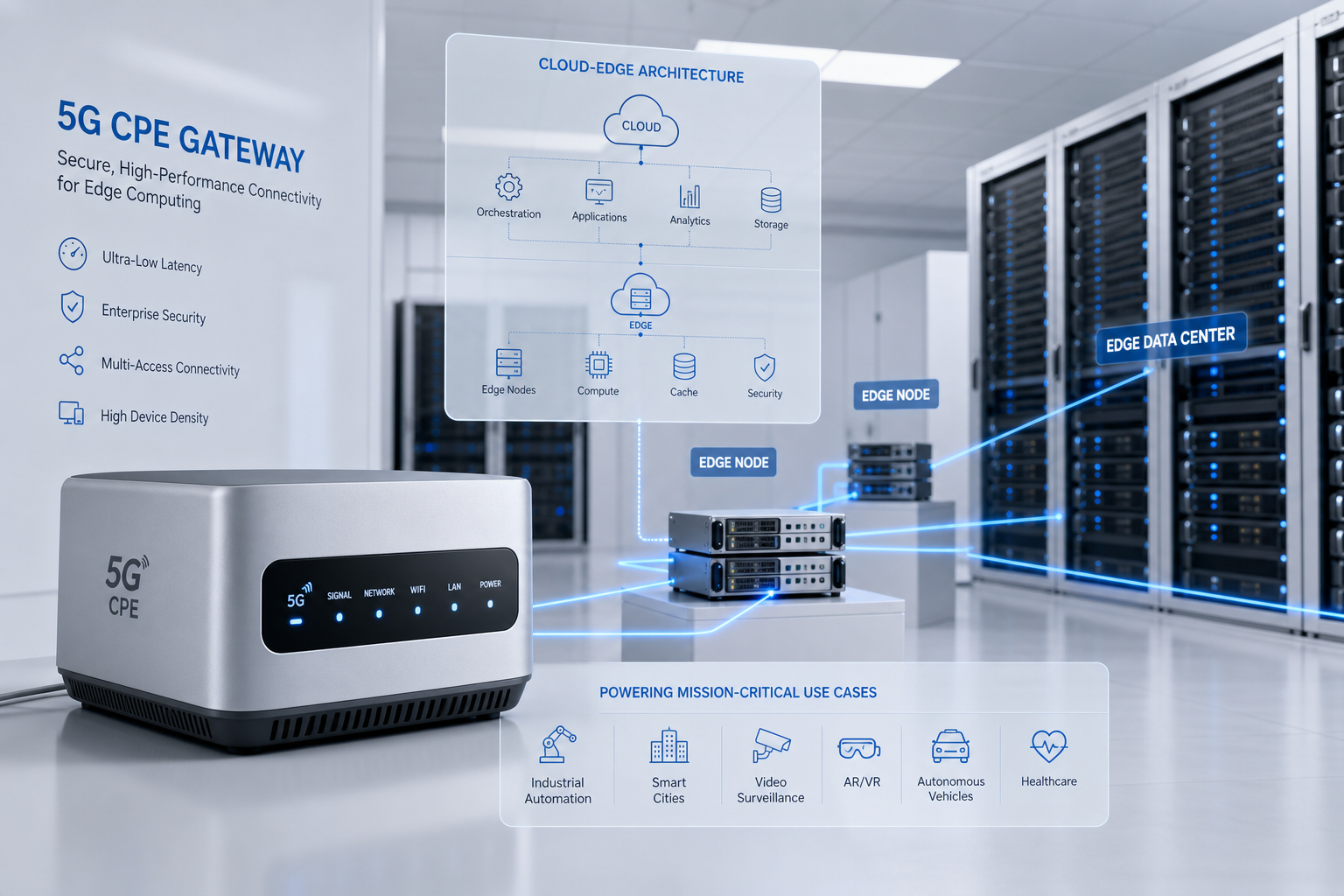
    Edge computing exists on a continuum from “far edge” (device-level) through “near edge” (on-premise gateway) to “regional edge” (metro data center). 5G CPE occupies a strategic position at the near edge — the on-premise demarcation point where WAN connectivity meets LAN distribution. This position is architecturally significant because it combines three critical functions: WAN termination, local traffic routing, and now, computational workload hosting.

    The economic rationale for embedding compute in CPE is straightforward. A 5G CPE device with a quad-core ARM Cortex-A78 processor, 4–8 GB of RAM, and 64–128 GB of eMMC or NVMe storage — specifications now common in mid-range to premium FWA gateways — possesses more computational capacity than a typical branch-office server from five years ago. Running lightweight workloads on this existing hardware avoids the capital and operational expense of deploying separate edge servers at every site.

    Architectural Patterns for CPE-Edge Integration

    Pattern 1: Container-Native CPE

    The most flexible approach embeds a container runtime (Docker Engine, containerd, or Podman) directly within the CPE operating system. This allows enterprise IT organizations to deploy containerized applications — protocol translators (Modbus-to-MQTT, OPC-UA-to-HTTP), local analytics engines, caching proxies — directly on the CPE without additional hardware.

    Architecturally, this requires the CPE operating system to implement workload isolation (cgroups v2, seccomp profiles, AppArmor/SELinux policies), resource allocation controls (CPU pinning, memory limits, I/O bandwidth caps), and lifecycle management APIs compatible with enterprise orchestration platforms. The kernel must support overlay filesystems, bridge/NAT networking with VLAN awareness, and secure container image verification via content trust mechanisms.

    From a procurement perspective, container-native CPE should expose a Kubernetes-compatible API (Kubelet or K3s agent) to enable unified orchestration across thousands of distributed gateways. GitOps workflows — where container configurations are declared in Git repositories and reconciled automatically — dramatically reduce the operational burden of managing distributed edge fleets.

    Pattern 2: eBPF-Accelerated Data Plane

    For performance-sensitive edge workloads, extended Berkeley Packet Filter (eBPF) enables programmable packet processing directly within the Linux kernel without kernel module modifications. On a 5G CPE, eBPF programs can implement line-rate traffic classification and steering at 5–10 Gbps, distributed DDoS mitigation at the ingress point, and local telemetry aggregation with minimal CPU overhead.

    CPE with eBPF capability requires kernel version 5.8+ with BTF (BPF Type Format) support, the bpftool utility, and pre-compiled eBPF object files or a CO-RE (Compile Once, Run Everywhere) toolchain for portability across kernel versions.

    Pattern 3: WebAssembly at the Edge

    WebAssembly (Wasm) is emerging as a compelling alternative to containers for ultra-lightweight edge workloads. Wasm modules are typically sub-megabyte in size, start in microseconds, and execute in a sandboxed runtime with near-native performance. For 5G CPE devices, Wasm enables protocol adaptation (Modbus-to-MQTT), data filtering that reduces WAN bandwidth by 60–80%, and lightweight policy enforcement at the network ingress point.

    Deployment Models

    Standalone Edge CPE. A single CPE device running integrated compute serves as both WAN gateway and edge node. Suitable for small retail locations, pop-up sites, and temporary deployments with the simplicity of a single-box solution.

    Tiered Edge Architecture. Larger deployments benefit from a tiered approach: lightweight CPE devices handle WAN termination while a dedicated on-premise edge server runs heavier workloads, communicating over local high-speed Ethernet or Wi-Fi 7 backhaul.

    Distributed Mesh with CPE Peering. In campus-scale deployments, CPE devices can form a mesh overlay using WireGuard or IPsec tunnels, enabling workload migration between CPE nodes with distributed service discovery and P2P image distribution.

    Procurement Considerations

    When evaluating 5G CPE for edge computing deployments, procurement teams should verify: quad-core ARM Cortex-A78+ processor at 2.0 GHz+, 8 GB LPDDR5 RAM, 128 GB NVMe storage, Docker-compatible container runtime (preferably K3s/Kubelet agent), Linux kernel 6.1+ with eBPF BTF support, optional integrated NPU for inference workloads, TR-369 USP management, and TPM 2.0 with DICE attestation for security.

    Conclusion

    5G CPE is no longer just a connectivity endpoint — it is becoming the distributed compute node that anchors enterprise edge architectures. For organizations deploying private 5G, branch connectivity, or IoT infrastructure, selecting CPE with integrated container runtime, eBPF acceleration, and Wasm support transforms a connectivity cost center into a platform for distributed application innovation. The procurement decision should evaluate not just throughput and band support, but the programmability, orchestration integration, and security attestation capabilities that define the next generation of edge-native CPE.

  • Private 5G Networks Drive Enterprise Campus Digital Transformation as Spectrum Liberalization Accelerates Global Adoption

    Private 5G Networks Drive Enterprise Campus Digital Transformation as Spectrum Liberalization Accelerates Global Adoption

    The enterprise connectivity landscape is undergoing a structural shift as private 5G networks emerge from pilot programs into full-scale production deployments. With regulators across Europe, Asia-Pacific, and North America liberalizing shared and local spectrum access — including the n77 (3.7 GHz), n78 (3.5 GHz), and n79 (4.7 GHz) bands — enterprises are increasingly bypassing traditional operator-led models to deploy dedicated 5G infrastructure on their own campuses.

    The Private 5G Value Proposition

    Private 5G networks offer enterprises three distinct advantages over Wi-Fi 6E/7 and public cellular services: deterministic performance, comprehensive coverage control, and sovereign data governance. Unlike Wi-Fi, which operates in unlicensed spectrum subject to interference and contention, private 5G in licensed or shared spectrum provides guaranteed QoS parameters including latency ceilings below 10 ms, jitter tolerance under 1 ms, and throughput guarantees per connected endpoint.

    For manufacturing facilities, logistics hubs, port terminals, mining operations, and smart campuses, these performance guarantees translate directly into operational reliability. A Tier 1 automotive supplier deploying private 5G across a 500,000-square-meter production floor can maintain real-time communication with 5,000+ sensors, AGVs (automated guided vehicles), and AR-assisted assembly stations without the co-channel interference that plagues high-density Wi-Fi deployments.

    Spectrum Liberalization: The Catalyst

    The regulatory environment is the primary accelerant. Germany’s BNetzA has allocated 100 MHz in the 3.7–3.8 GHz band specifically for local private networks (Campusnetze), with over 200 licenses issued by mid-2026. Japan’s MIC has designated the 4.6–4.9 GHz and 28.2–28.3 GHz bands for local 5G. The United States, through the CBRS framework in the 3.55–3.70 GHz band, continues to expand Priority Access License (PAL) availability. France, the United Kingdom, South Korea, and Australia have all implemented comparable frameworks.

    This regulatory momentum is matched by ecosystem maturity. The 3GPP Release 17 specifications introduced enhanced support for non-public networks (NPNs), including Standalone Non-Public Network (SNPN) and Public Network Integrated NPN (PNI-NPN) deployment models. Release 18, finalized in mid-2024 and now reaching commercial silicon, adds further optimizations for private network slicing, positioning, and reduced-capability (RedCap) endpoints tailored to enterprise IoT.

    CPE Requirements for Private 5G

    Enterprise private 5G deployments create distinct requirements for customer premises equipment. Unlike consumer-grade FWA gateways, private 5G CPE must support:

    Multi-band Carrier Aggregation with NPN Identification. Devices must simultaneously aggregate public network anchor carriers with private network capacity layers while respecting CAG (Closed Access Group) cell selection and NPN identification procedures. This ensures seamless data path separation between enterprise traffic (routed locally) and internet-bound traffic (routed via public MNO core).

    Local Breakout and Edge Routing. Private 5G CPE units increasingly function as micro-edge nodes. With integrated DPDK (Data Plane Development Kit) or eBPF-based packet processing, these devices can perform local traffic steering — routing latency-sensitive industrial traffic directly to on-premise MEC (Multi-access Edge Computing) servers while backhauling non-critical traffic to centralized cloud resources.

    TSN Integration for Industrial Ethernet. Time-Sensitive Networking (TSN) bridging between 5G and IEEE 802.1Q wired Ethernet is critical for industrial environments. CPE supporting 5G-TSN interworking as defined in 3GPP TS 23.501 can deliver deterministic end-to-end latency profiles across wireless and wired segments, enabling replacement of legacy fieldbus wiring with wireless links.

    Zero-Touch Provisioning at Scale. Enterprise IT organizations demand the same provisioning simplicity for cellular CPE that they expect from Wi-Fi access points. TR-369 USP (User Services Platform) with bulk onboarding, certificate-based authentication, and group policy configuration enables deployment of hundreds of CPE units across multiple campus buildings without truck rolls.

    Market Trajectories

    Industry analyst projections suggest the global private 5G equipment market — encompassing RAN, core, and CPE — will exceed USD 12 billion by 2028, with a compound annual growth rate exceeding 38%. Manufacturing and logistics represent the two largest vertical segments, followed by energy/utilities, healthcare, and education.

    CPE specifically represents a growing share of this market. While early private 5G deployments relied on industrial routers repurposed from public network applications, the market now demands purpose-built devices with NPN-native firmware stacks, industrial interface options (RS-232/485, digital I/O, PROFINET/EtherCAT bridging), and hardened enclosures for factory-floor conditions.

    Strategic Implications for Equipment Vendors

    For ODM/OEM manufacturers serving the telecom equipment channel, private 5G represents a structural growth opportunity distinct from the maturing consumer FWA market. Key strategic considerations include:

    Certification Readiness. Private 5G CPE will increasingly require certification against enterprise standards including IEC 62443 (industrial cybersecurity) and specific NPN protocol conformance. Early investment in test infrastructure creates competitive moat.

    Software-Defined Flexibility. Enterprise buyers value programmable packet processing and API-driven management. CPE platforms built on open-source foundations (OpenWrt with 5G modem abstraction layers, DPDK user-space forwarding) enable customization without hardware redesign.

    Multi-Spectrum Support. Devices supporting n48 (CBRS), n77, n78, and n79 bands with software-definable radio front-ends can address global private network deployments from a single hardware SKU, dramatically simplifying inventory management for system integrators and distributors.

    Edge Compute Convergence. The CPE and edge compute functions are converging. Devices with integrated container runtime environments capable of hosting lightweight enterprise applications (protocol translators, local dashboards, anomaly detection agents) deliver value beyond connectivity.

    Conclusion

    Private 5G networks are transitioning from experimental to operational, driven by spectrum availability, ecosystem maturity, and demonstrable enterprise ROI. For CPE manufacturers, the opportunity lies not merely in supplying connectivity endpoints but in delivering integrated compute-and-connect platforms purpose-built for enterprise NPN environments. Organizations evaluating CPE procurement for private 5G deployments should prioritize devices with NPN-native firmware, industrial interface flexibility, zero-touch provisioning, and edge compute capability — capabilities that define the next generation of enterprise wireless infrastructure.