
Honlly Telecom Blog

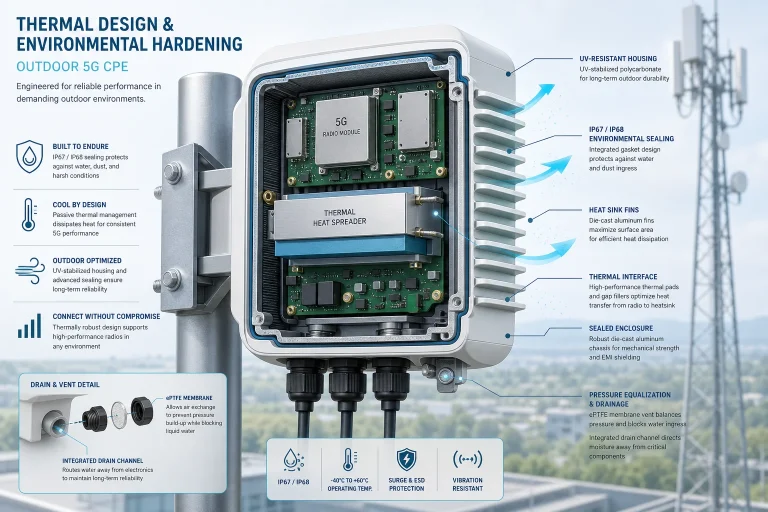
Thermal Design and Environmental Hardening for Outdoor 5G CPE: Engineering Reliability, IP Rating Standards, and Field Deployment Strategies for Telecom Operators
When a telecom operator deploys 50,000 outdoor 5G CPE units across Southeast Asia, the first engineering question isn't about throughput — it's about whether those devices will survive 45°C ambient temperatures, monsoon humidity, and direct solar radiation for…
Read article →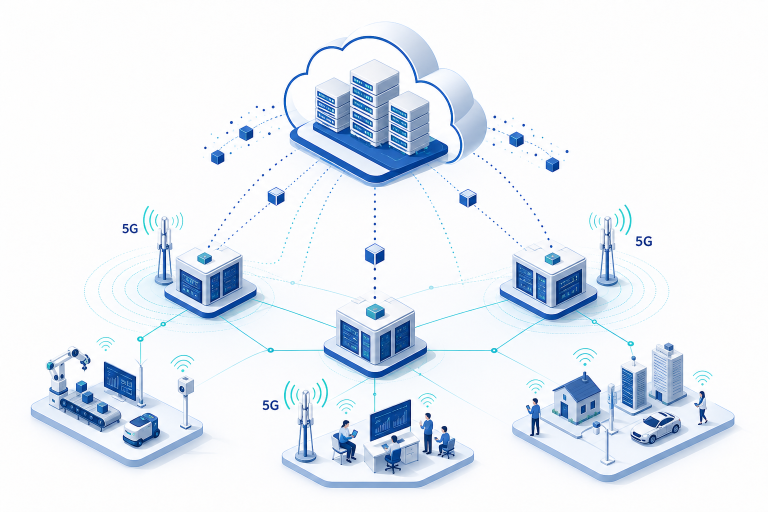
Edge Computing on 5G CPE: A Technical Guide to MEC Integration, Local Breakout Architecture, and Enterprise Application Hosting for ISPs and System Integrators
As enterprise networks evolve toward distributed architectures and latency-sensitive applications proliferate, the traditional model of backhauling all traffic to a centralized data center or cloud region is reaching its limits. Multi-access Edge Computing (MEC) integrated with 5G CPE…
Read article →
End-to-End QoS Architecture for Multi-Service 5G CPE: A Technical Guide to Traffic Classification, Hierarchical Shaping, and SLA Enforcement for MVNO and Wholesale Operator Deployments
A comprehensive technical reference architecture for implementing end-to-end QoS in multi-service 5G CPE. Covers HTB queuing, 5QI-to-DSCP mapping, DPI classification, per-VRF tenant isolation, and SLA monitoring — designed for MVNO and wholesale operator engineering teams evaluating CPE platforms…
Read article →
A Field Engineer’s Guide to 5G FWA Site Survey and CPE Installation: From Signal Measurement to Throughput Verification
A step-by-step methodology for 5G FWA site surveys and outdoor CPE installation. Covers signal measurement, antenna alignment, throughput verification, and a complete field documentation checklist for ISP and operator deployment teams.
Read article →
5G NR-U (NR in Unlicensed Spectrum) for Enterprise CPE: A Technical Guide to License-Assisted Access, Standalone NR-U, and Private Network Deployment Architectures
As the global demand for private wireless networks accelerates, enterprises and system integrators are increasingly exploring spectrum options beyond traditional licensed bands. 5G NR-U (New Radio in Unlicensed Spectrum) has emerged as a compelling alternative, offering the performance…
Read article →
5G CPE Total Cost of Ownership Analysis for ISP Procurement: CAPEX, OPEX, and Lifecycle Economics for Fixed Wireless Access Rollouts
A comprehensive 5-year TCO framework for ISP and operator CPE procurement. Analysis of CAPEX vs OPEX, self-install economics, field failure costs, and why the lowest unit price rarely delivers the lowest total cost.
Read article →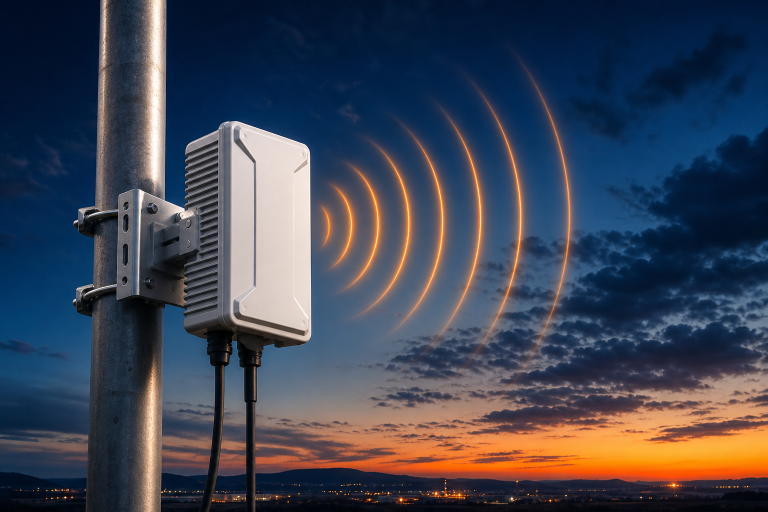
MIMO and Beamforming Antenna Technology in 5G CPE: A Technical Deep-Dive into Antenna Array Design, Massive MIMO Performance, and Real-World Throughput Optimization for Fixed Wireless Access
Technical deep-dive into MIMO and beamforming antenna technology in 5G CPE. Covers antenna gain, efficiency, isolation, 2×2 vs 4×4 MIMO real-world performance, beamforming architectures, indoor vs outdoor design trade-offs, and a structured antenna evaluation framework for telecom procurement.
Read article →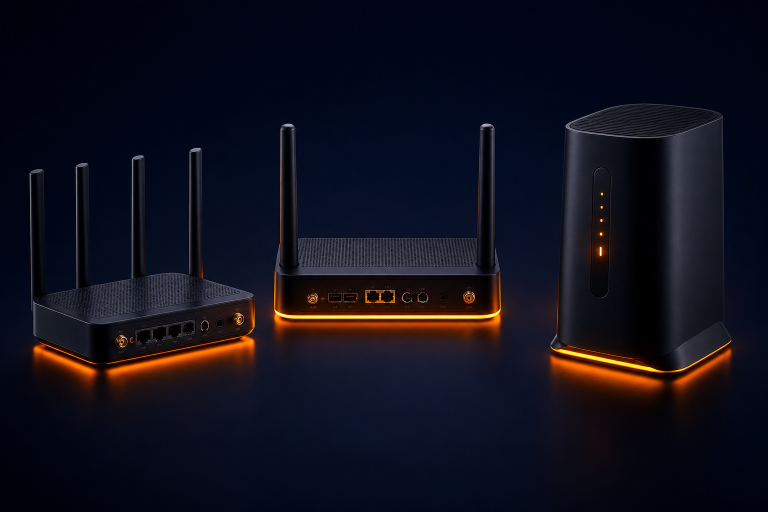
Cloud-Native CPE Fleet Management Platforms: A Technical Buyer’s Guide to Zero-Touch Provisioning, TR-069/TR-369 ACS Selection, and Multi-Tenant Orchestration for ISPs
A comprehensive technical buyer's guide to cloud-native CPE fleet management platforms. Covers Zero-Touch Provisioning (ZTP), TR-069 vs TR-369 USP protocol selection, multi-tenant architecture, RBAC, analytics, and a 10-question vendor selection checklist for telecom operators and ISPs.
Read article →
Subscriber QoE Management for Fixed Wireless Access Networks: SLA Monitoring, Proactive Fault Detection, and Analytics Architecture for ISP CPE Fleet Operations
Why Subscriber QoE Management Has Become Critical for FWA Operators Fixed Wireless Access has matured from an opportunistic broadband fill-in technology to a primary access strategy for operators worldwide. With that maturation comes a fundamental shift in subscriber…
Read article →
CPE Firmware Security Architecture for Telecom Operators: A Technical Framework for Secure Boot, OTA Update Integrity, and Zero-Trust Device Management
Technical framework for CPE firmware security: hardware-rooted secure boot, OTA update integrity with anti-rollback, TEE key isolation, and zero-trust device identity for telecom operators.
Read article →
A Network Operator’s Practical Guide to CPE Power over Ethernet (PoE) Architecture: From PoE Type Selection to Multi-Gigabit Outdoor Deployments
A practical guide to Power over Ethernet architecture for CPE deployments: PoE standards selection, cable infrastructure, surge protection, and multi-gigabit backhaul planning for operators and ISPs.
Read article →
A Technical Guide to IPv6 Transition Strategies in 4G/5G CPE: Dual-Stack, DS-Lite, MAP-T, and 464XLAT Implementation for Carrier-Grade Deployments
A comprehensive technical guide to IPv6 transition mechanisms for 4G/5G CPE: dual-stack, DS-Lite, MAP-T, and 464XLAT implementation strategies for carrier-grade deployments.
Read article →IoT Connectivity: Endpoint and Gateway Selection
Enterprise IoT deployments demand careful connectivity architecture decisions. This comparative guide evaluates 4G LTE, 5G NR, NB-IoT, and LoRaWAN across eight dimensions — throughput, latency, power consumption, coverage, spectrum cost, device ecosystem, scalability, and total cost of ownership…
Read article →
How to Select an OEM/ODM Manufacturing Partner for Telecom CPE: A 12-Point Due Diligence Framework for ISPs, Operators, and MVNOs
Choosing the right OEM/ODM partner for 4G/5G CPE, MiFi, and FWA devices can determine product quality, time-to-market, and total cost of ownership. This 12-point framework covers R&D capability, certification portfolio, supply chain resilience, and regulatory compliance.
Read article →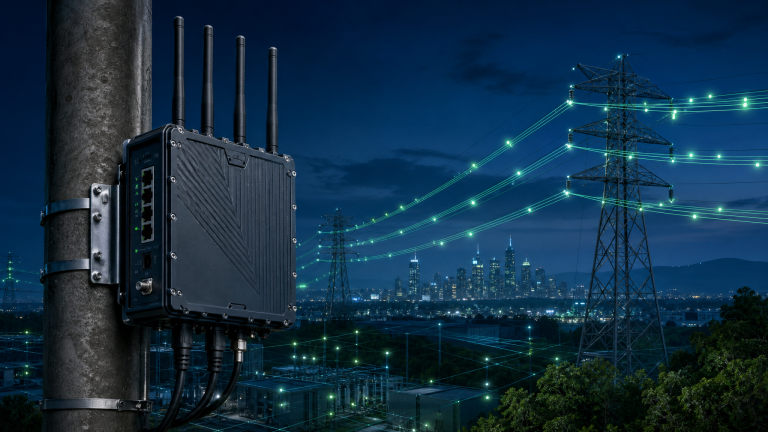
Industrial 4G/5G Router Selection for Smart Grid Deployments: Protocol Support, Cybersecurity Certification, and Environmental Hardening Requirements
A comprehensive selection guide for utility operators evaluating industrial 4G/5G routers for smart grid deployments. Covers IEC 61850-3 environmental hardening, NERC CIP and NIS2 cybersecurity certification, utility protocol support, and RFP evaluation criteria.
Read article →