
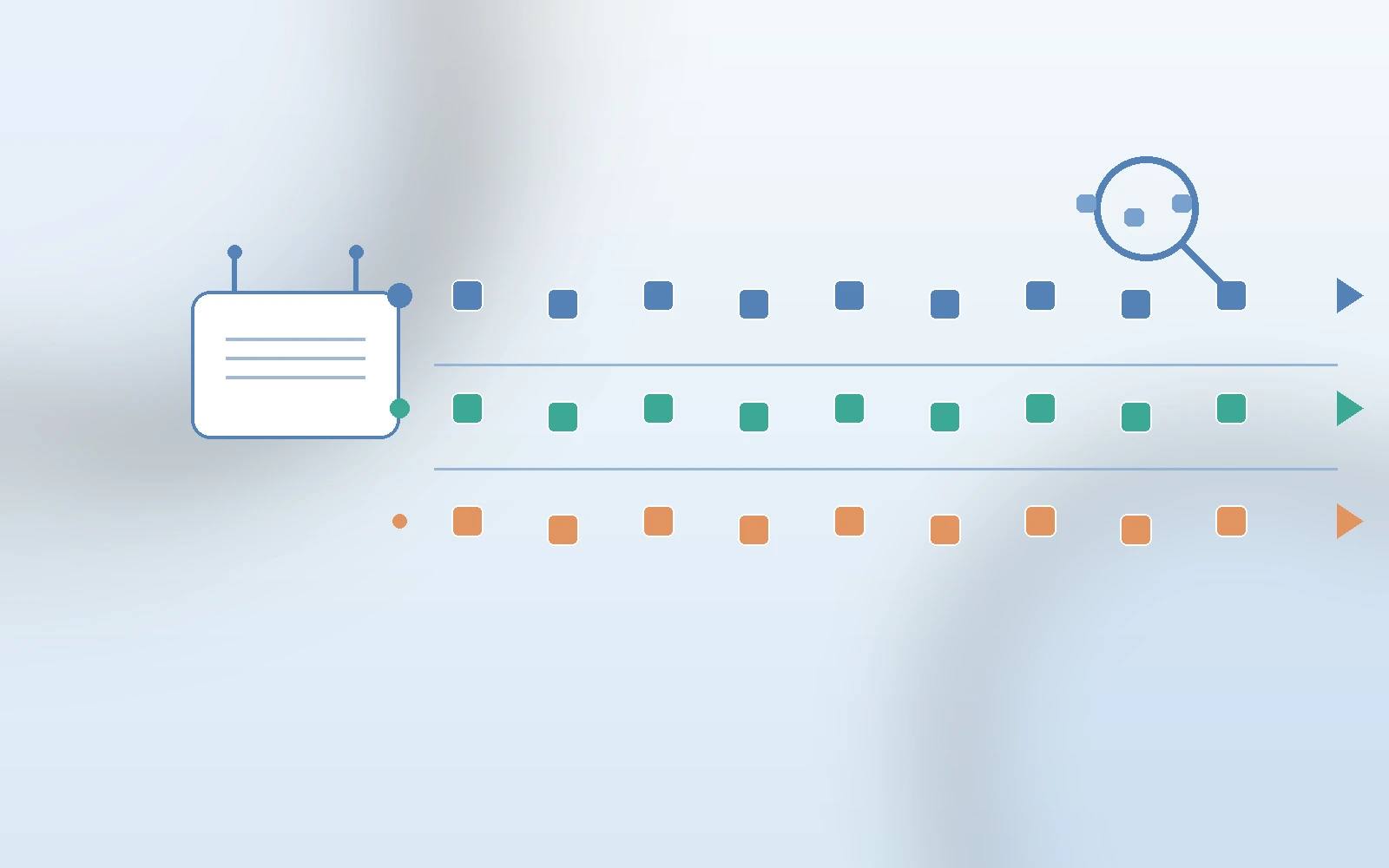
Raw throughput is easy to sell and hard to guarantee. The services operators actually build their margins on—managed voice, business-grade internet, SD-WAN, latency-sensitive IoT and tiered consumer plans—depend not on how fast the pipe is, but on how reliably the right traffic gets through it. That is the job of quality of service (QoS), traffic shaping and deep packet inspection (DPI) in the CPE, and it is why these features deserve far more attention in procurement than they usually get.
Why QoS matters more than peak speed
On a shared access link, traffic competes. A large download can starve a voice call, and bursty video can delay a payment terminal transaction. QoS is the set of mechanisms that classify traffic and allocate bandwidth, latency and priority so that the services that need it most get it first. For an operator, QoS is what turns best-effort broadband into a differentiated, billable product with enforceable service levels.
Traffic classification: shallow vs deep
Before traffic can be prioritised it must be identified. Shallow classification uses the information in packet headers—IP addresses, ports and protocols—to recognise traffic types. It is fast and cheap but increasingly unreliable as applications hide behind encrypted tunnels and shared ports. Deep packet inspection looks inside the packet to identify applications and services even when encrypted, using heuristics and behavioural signatures. The trade-off is processing load and, in some markets, regulatory attention, but for operators that need application-aware policy, DPI is the enabling technology.
Queuing, scheduling and shaping
Once traffic is classified, the CPE applies policy through queuing and scheduling disciplines that decide which packets leave first, and shaping that smooths bursts to a committed rate. Buyers should look for support for the standard building blocks—priority queuing for voice, weighted scheduling for business classes, and rate limiting that enforces per-subscriber or per-plan caps. The ability to guarantee a minimum rate for critical traffic while allowing best-effort traffic to use spare capacity is what keeps a link feeling consistent under load.
Latency-sensitive services and VoNR
Voice and real-time services are the hardest test of QoS. A VoLTE or VoNR call delivered over the CPE’s telephony line needs prioritised, low-jitter treatment end to end, and the same applies to industrial control and live video. Buyers should verify the device’s handling of real-time traffic—queueing priority, jitter buffering and DSCP/802.1p marking—so that latency-sensitive services are protected at every hop the operator controls.
Policy integration and management
QoS in the CPE is only valuable if it is policy-driven and centrally manageable. The device should expose traffic classification and policy through the operator’s TR-069 or TR-369 (USP) management plane, so operators can define, deploy and update service tiers without touching each box. A CPE whose QoS is locked behind a local web UI is a consumer device, not a managed-service platform.
Evaluation checklist for QoS and DPI in 5G CPE
- Traffic classification capability: header-based only, or DPI for application awareness
- Queuing and scheduling disciplines and their support for real-time traffic
- Rate limiting and shaping for per-subscriber and per-plan enforcement
- DSCP/802.1p marking for end-to-end QoS across the operator network
- Central policy management via TR-069/TR-369, not local-only configuration
- Throughput under load with QoS active—verify it holds up in practice
QoS is the difference between selling bandwidth and selling an experience. A 5G CPE with robust classification, disciplined scheduling and central policy control lets operators deliver consistent, billable managed services—and gives subscribers a reason to keep paying for quality rather than shopping on price alone.