
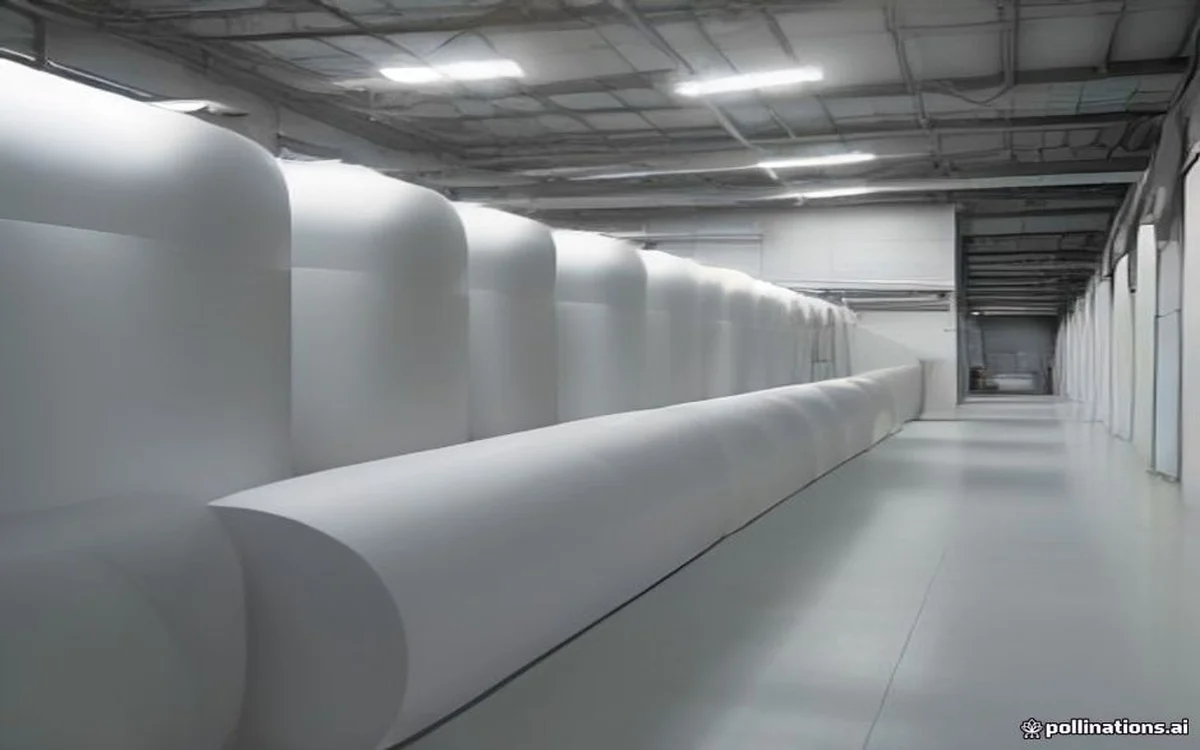
Paper and pulp mills run continuous processes where a few minutes of unplanned downtime can waste entire production runs. Yet many of these plants still rely on aging, cable-bound networks that are difficult to extend across large, wet, and vibration-heavy buildings. A rugged 5G CPE offers a practical way to bring reliable, low-latency connectivity to converting lines, moisture sensors, and roll tracking systems without the cost of new conduit.
Why paper and pulp mills need resilient fixed wireless
Pulp and paper facilities are among the most demanding industrial environments for networking. High humidity, temperature swings, dust, and constant machine vibration shorten the life of ordinary office equipment. At the same time, mills are physically large, with production spread across multiple buildings, warehouses, and outdoor chip and log yards. Running fiber to every sensor or PLC is expensive, and wireless gives operations teams a way to extend the network to wherever a process actually runs.
Fixed wireless also serves as a dependable secondary WAN. A 5G CPE configured for failover keeps supervisory control and data acquisition (SCADA) traffic flowing if the primary enterprise link drops, which is critical when a paper machine cannot be safely idled without real-time process data.
Key CPE specifications for mill environments
When evaluating 5G CPE for a paper or pulp mill, start with the enclosure. Look for an industrial rating, a wide operating temperature range, and protection against moisture and particulate ingress. PoE simplifies installation on machines where power is scarce but Ethernet drops already exist. Dual-SIM support lets the mill run two operator profiles for redundancy, and external antenna connectors are important because mill buildings with heavy steel structures can attenuate indoor cellular signals.
On the networking side, VLAN support separates process-control traffic from business systems, while VPN and firewall features protect OT assets. For a mill managing dozens of CPE units across multiple lines, TR-069 or TR-369 remote management keeps firmware current and troubleshooting centralized.
Where fixed wireless delivers the most value
Converting lines benefit from CPE backhauling quality-control cameras, laser measurement systems, and reel scanners that detect defects in real time. Moisture and temperature monitoring on the paper machine and dryer section depends on continuous sensor streaming that a dedicated wireless uplink can carry reliably. Roll tracking and warehouse operations use handheld scanners and label printers that connect through the same infrastructure, and outdoor chip yards or wood handling areas can be brought onto the network with an outdoor-rated CPE and external antennas.
Selecting the right 5G CPE for your facility
Choose a CPE that matches the mill’s actual RF environment, not just its datasheet. Verify carrier band support against local operators, confirm the device supports the antenna ports you need, and validate failover behavior under load before rollout. Pilot the equipment on one converting line first, measure latency and packet loss during production, then scale the deployment across the plant.
Frequently asked questions
Can 5G CPE replace wired networks in a paper mill?
For many production and logistics use cases, yes. Fixed wireless works well for sensor backhaul, quality monitoring, and roll tracking. Mission-critical safety interlocks and deterministic control loops are usually kept on wired or specialized industrial protocols.
Does humidity affect 5G CPE performance?
Indoor-rated equipment can degrade in high-humidity areas, so choose a rugged, industrial enclosure with an appropriate ingress protection rating and wide operating temperature range.
How do I ensure reliable connectivity across a large mill site?
Use external antennas mounted for line-of-sight to the cell tower, select dual-SIM devices for operator redundancy, and consider outdoor-rated CPE for chip yards and remote buildings.
Honlly Telecom provides industrial-grade 4G and 5G CPE for paper, pulp, and process manufacturing. Contact us to evaluate fixed wireless for your converting lines, moisture monitoring, and roll tracking systems.