
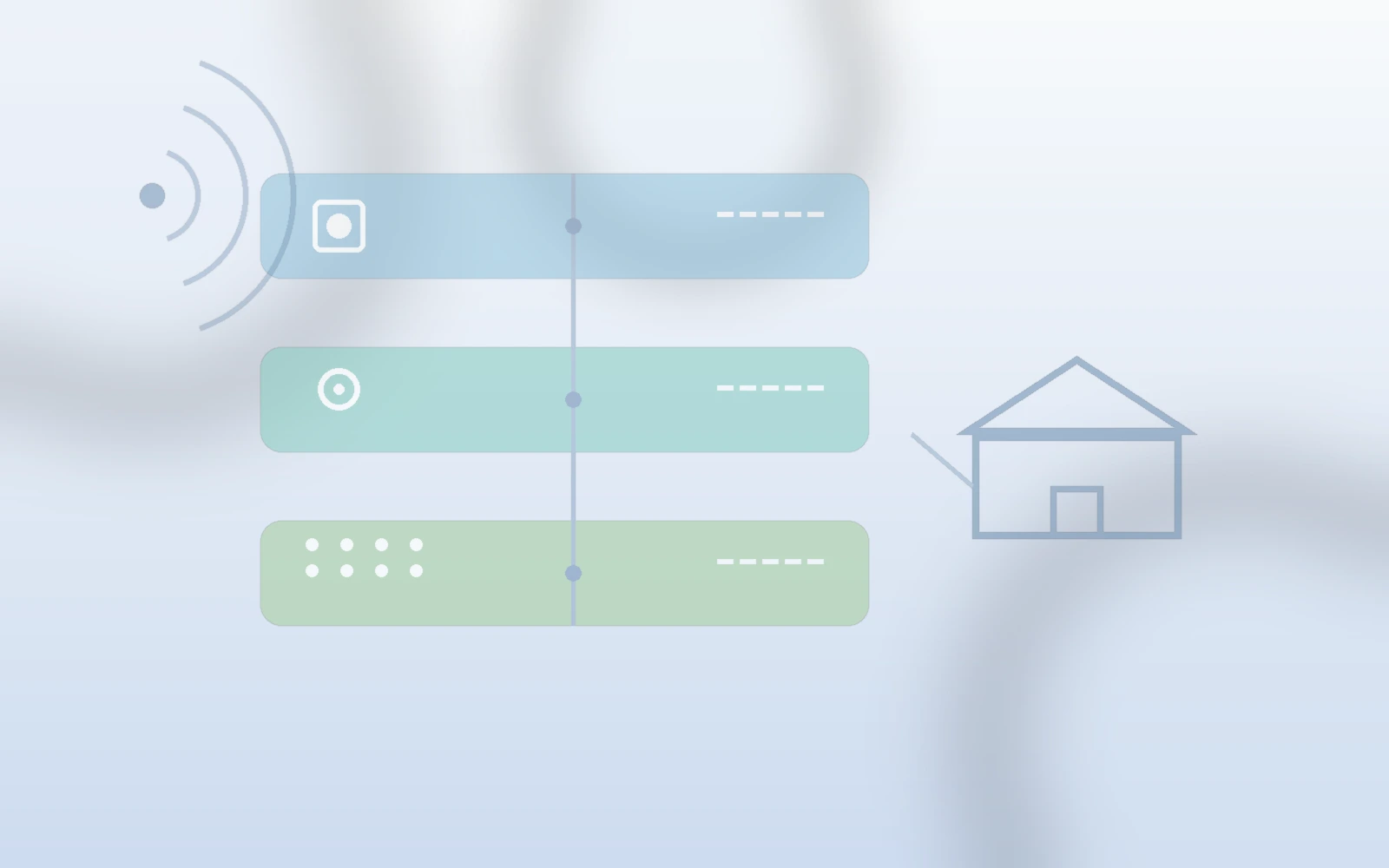
Network slicing is one of the most powerful — and most misunderstood — capabilities of 5G standalone (SA) architecture. For system integrators, private network operators and enterprise buyers, slicing is what lets a single 5G network behave like several: one slice for critical control traffic, another for high-bandwidth video, another for massive IoT. The CPE at the edge of the network determines whether that promise actually reaches the customer’s devices.
What network slicing is (and is not)
A network slice is an end-to-end logical network with its own quality-of-service, latency and isolation guarantees, defined by an S-NSSAI (Single Network Slice Selection Assistance Information) identifier. Slicing is a 5G SA feature — it requires a 5G core and does not exist in NSA (non-standalone) mode, which still depends on a 4G LTE core.
How CPE participates in slicing
The CPE is where slicing lands at the customer site. The key mechanisms to evaluate:
- URSP (UE Route Selection Policy): a rule set delivered by the network that tells the device which traffic should use which slice and which PDU session.
- Multiple PDU sessions: a slicing-capable CPE should maintain several simultaneous PDU sessions, each bound to a different S-NSSAI.
- Slice-aware routing and QoS mapping: the device must map LAN traffic (VLANs, ports, or application categories) onto the correct slice.
Where slicing matters for enterprises
- Private 5G (NPN) campus networks: one slice for industrial control (uRLLC), another for cameras and video (eMBB), another for sensors (mMTC).
- Branch and SD-WAN scenarios: a dedicated slice for business-critical traffic with guaranteed latency, while best-effort traffic uses a separate slice.
- Multi-tenant industrial sites: an integrator can deliver isolated slices to different tenants on shared infrastructure.
Evaluation checklist for integrators and enterprise buyers
- Confirm the CPE modem and firmware support 5G SA and URSP, not just NSA.
- Verify support for multiple simultaneous PDU sessions and the maximum count.
- Check how the CPE maps LAN-side traffic (VLAN to slice, port to slice, application-based) — and whether this is manageable via TR-369 USP.
- Confirm compatibility with the operator’s SIM/eSIM slice provisioning flow (including SGP.32 for eSIM-based IoT fleets).
- Validate end-to-end latency and isolation in a lab before committing to a large rollout.
Network slicing only delivers value if the CPE at the edge is slice-aware. Honlly Telecom provides 5G SA-capable CPE with URSP support, multi-PDU-session handling and TR-369 management for private 5G and enterprise deployments. Discuss your slicing requirements with our engineering team.