
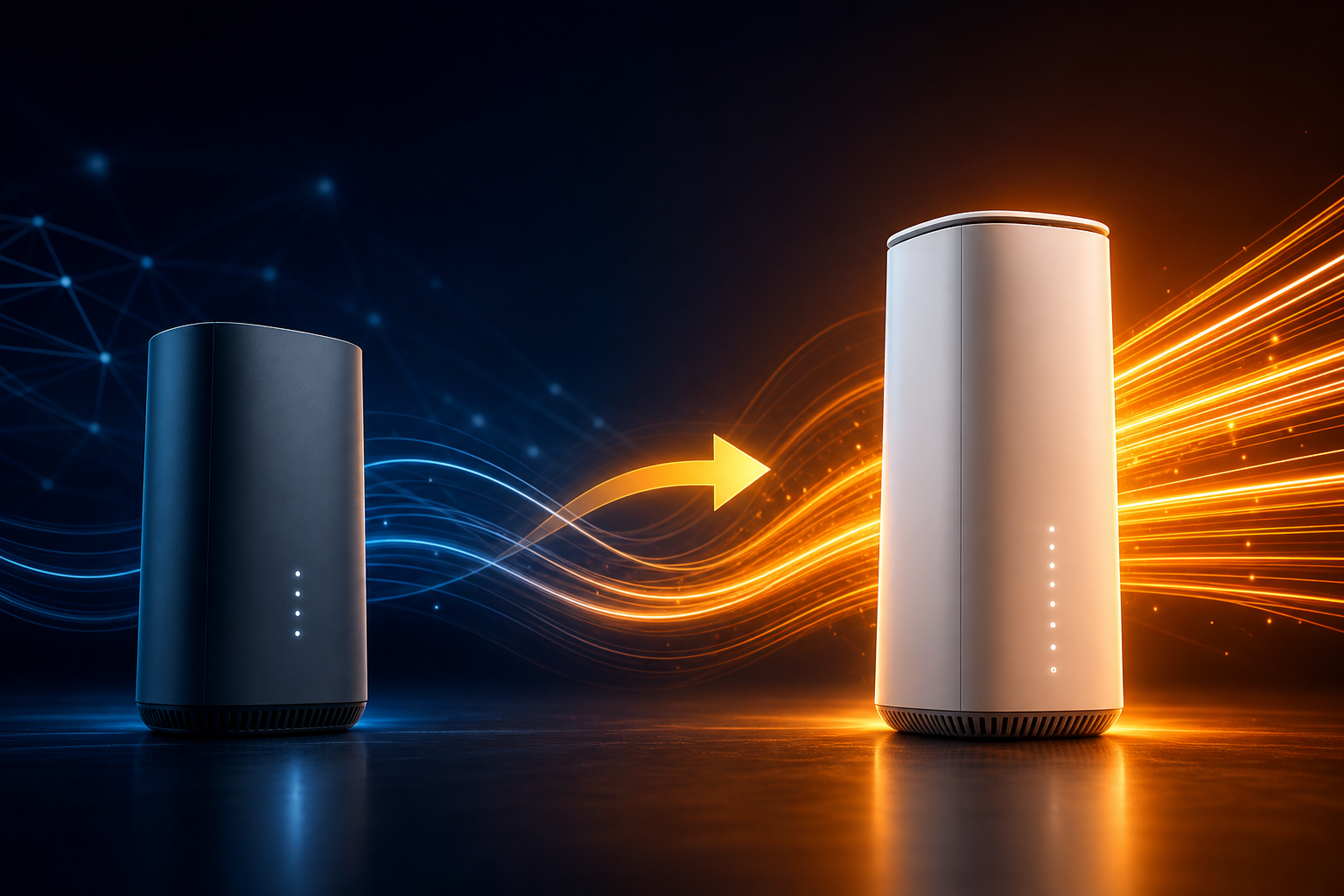
Mobile Virtual Network Operators (MVNOs) face a persistent challenge: how to acquire subscribers profitably in markets where smartphone penetration is rising but fixed broadband infrastructure remains thin. In 2026, a growing number of MVNOs are finding their answer in an unlikely place — the 4G MiFi router.
The MVNO Economics of Portable Broadband
Unlike traditional mobile plans that bundle voice, SMS, and data into a single smartphone subscription, a 4G MiFi device creates a dedicated data revenue stream. For MVNOs operating on thin margins, this separation unlocks three advantages:
- Lower subscriber acquisition cost (SAC): A 4G MiFi + data SIM bundle can be priced 30–50% below an equivalent smartphone plan, lowering the barrier to trial.
- Reduced device subsidy risk: Entry-level Cat4/Cat6 MiFi devices wholesale at $25–$45, versus $120+ for even budget smartphones. The subsidy exposure per subscriber is substantially lower.
- Predictable ARPU: Data-only plans generate consistent monthly revenue without the variable usage patterns of voice and SMS.
Three Deployment Models MVNOs Are Using Today
1. Prepaid Portable Broadband Packs
In markets across Southeast Asia, Africa, and Latin America, MVNOs are packaging Cat4 MiFi devices with 30-day prepaid data plans at retail price points between $15 and $35. The device acts as a customer acquisition tool, with data top-up driving recurring revenue. A typical bundle achieves payback within 3–4 months, after which the MVNO earns pure margin on data refills.
2. Home Broadband Replacement
In peri-urban and rural areas where DSL or fiber is unavailable, MVNOs are positioning Cat6/Cat7 MiFi routers as primary home internet devices. With carrier aggregation delivering 150–300 Mbps over 4G LTE, a single MiFi can serve a household of 4–6 connected devices. MVNOs in Eastern Europe and South Asia have reported 40%+ subscriber retention rates on these home broadband plans after 12 months.
3. SME Micro-Office Connectivity
Small businesses — retail kiosks, pop-up shops, remote field offices — need reliable internet without the cost and lead time of a fixed line. MVNOs offering business-tier MiFi plans with static IP options and higher data caps are capturing a sticky B2B segment that traditional mobile plans never addressed.
Key Hardware Considerations for MVNO Procurement
Not all 4G MiFi devices are suited for MVNO deployment at scale. Procurement teams should evaluate:
- Band compatibility: The device must support the LTE bands used by the host MNO. Global-band MiFi routers with B1/B3/B5/B7/B8/B20/B28 coverage offer the widest deployment flexibility.
- Battery capacity: For portable use, a 2,000–3,000 mAh battery provides 6–8 hours of active use. For home broadband, USB-powered or cradle-charged models reduce consumer friction.
- WiFi client capacity: Entry-level devices support 8–10 concurrent connections; mid-range Cat6/Cat7 MiFi routers handle 16–32 users, suitable for home or SME scenarios.
- Remote management: TR-069 or TR-369 support enables the MVNO to provision, monitor, and troubleshoot devices without truck rolls.
- Custom branding: OEM partners that offer logo printing, custom UI boot screens, and branded packaging help MVNOs build brand recognition in competitive markets.
OEM/ODM Advantage for MVNO Scale
For MVNOs planning deployments of 5,000+ units, working directly with a 4G MiFi OEM manufacturer delivers per-unit cost reductions of 15–25% versus off-the-shelf retail devices. OEM partnerships also enable custom firmware — including APN locking, data cap enforcement, and branded web UIs — that turn a generic MiFi into a carrier-grade subscriber acquisition tool.
FAQ
What is the minimum order quantity for branded 4G MiFi devices?
Most OEM manufacturers, including Honlly Telecom, offer custom branding starting from 1,000 units, with per-unit customization costs decreasing at 5,000+ unit volumes.
Can 4G MiFi devices support eSIM for MVNO flexibility?
Yes. eSIM-enabled MiFi routers allow MVNOs to provision network profiles remotely, eliminating physical SIM logistics and enabling multi-IMSI switching between host networks.
What is the typical lead time for OEM MiFi orders?
Standard OEM production lead times range from 4–8 weeks depending on customization requirements and volume. Rush orders can be accommodated at 2–3 weeks for repeat production runs.
Looking for a 4G MiFi OEM partner for your MVNO deployment? Contact Honlly Telecom to discuss custom branding, band configuration, and volume pricing.