
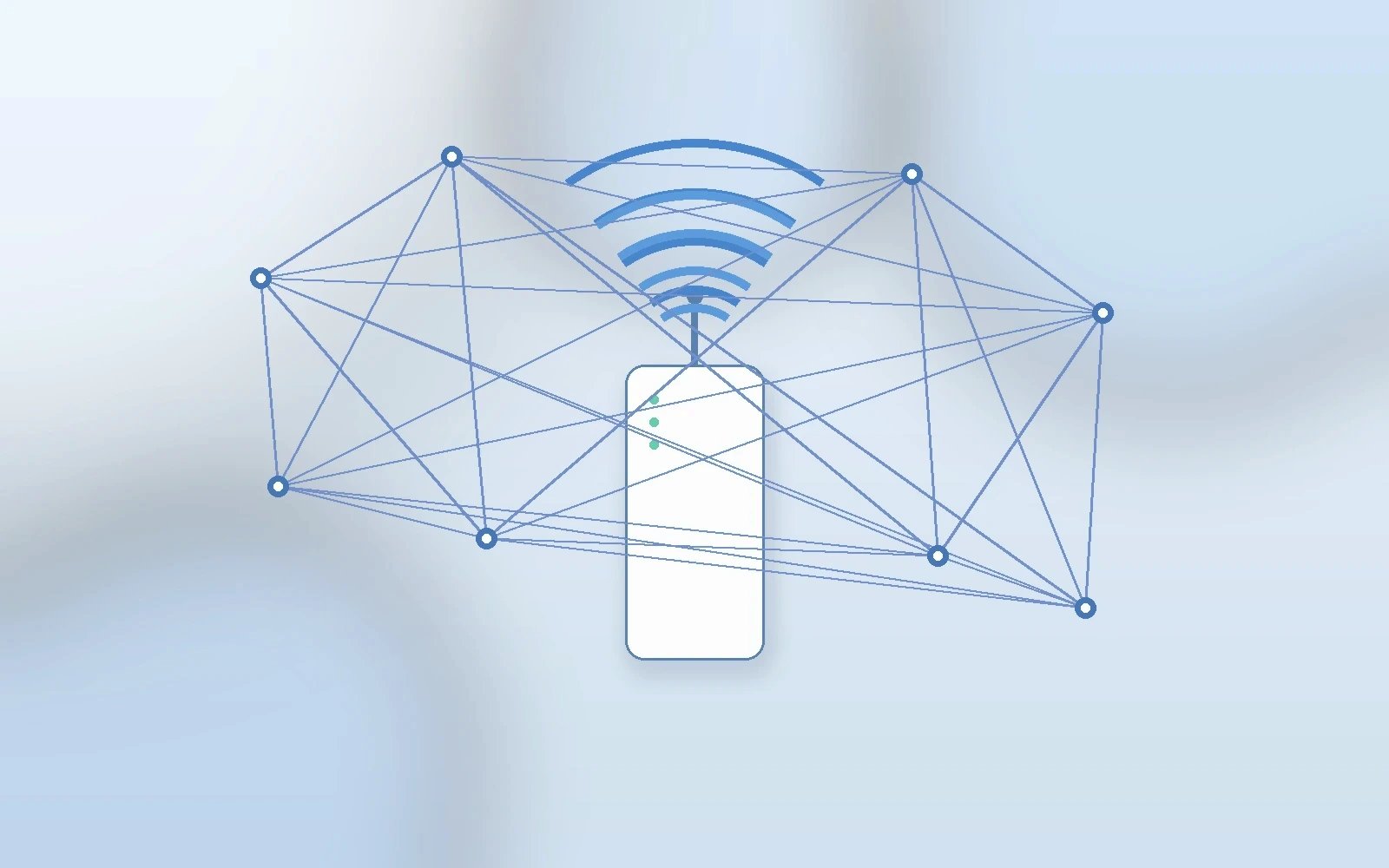
For years, fixed wireless access (FWA) was sold as a single best-effort broadband pipe: one SIM, one PDU session, one class of service. That model is now breaking down. As operators push 5G FWA into the enterprise segment, they need a way to sell differentiated, SLA-backed connectivity — a guaranteed low-latency slice for a branch office, a high-throughput slice for video surveillance, a massive-IoT slice for smart-metering — all over the same outdoor unit (ODU) and indoor unit (IDU) on the customer’s wall. That capability is network slicing, and it is fast becoming a procurement requirement, not a lab experiment.
What 5G network slicing actually is
Network slicing lets an operator carve one physical 5G network into multiple end-to-end logical networks, each with its own performance envelope. A slice is defined by a Single Network Slice Selection Assistance Information (S-NSSAI) identifier and is enforced from the radio access network (RAN) through the transport and into the 5G core — including its own user-plane function (UPF), QoS profile, and policy control. For a buyer, the practical effect is simple: a slice behaves like a dedicated virtual network with predictable throughput, latency, and reliability, instead of sharing one contended best-effort path with every other subscriber.
Three standard service types anchor most commercial slice plans:
- eMBB (enhanced Mobile Broadband) — high throughput for general enterprise data, cloud access, and bulk file transfer.
- uRLLC (ultra-Reliable Low-Latency Communication) — sub-10 ms latency for industrial control, real-time collaboration, and mission-critical branch backhaul.
- mMTC (massive Machine-Type Communication) — dense, low-power device connectivity for metering, sensors, and asset tracking.
Why slicing matters for FWA buyers
The economics are the driver. A single enterprise FWA customer frequently runs multiple workloads with conflicting requirements: a point-of-sale system that must never drop, a backup WAN link that can tolerate best-effort delivery, and a growing fleet of IoT sensors that need coverage more than bandwidth. Without slicing, an operator either over-provisions one expensive pipe for everything, or forces the customer to buy and manage several separate CPEs. Slicing collapses that into one ODU/IDU installation carrying multiple logical services — which lowers deployment cost and site complexity while letting the operator charge a premium for guaranteed slices.
What the ODU and IDU must support
Network slicing is not purely a core-network feature; the CPE has to be slicing-aware or the slices never reach the customer’s LAN. When evaluating 5G ODU/IDU equipment for slice-based services, these capabilities are non-negotiable:
- URSP (UE Route Selection Policy) — the device must receive and honour the operator’s routing rules so that each application or traffic flow is steered onto the correct PDU session and slice. This is the mechanism that ties a specific app to a specific slice.
- Multiple concurrent PDU sessions — one session per slice. A CPE that supports only a single session cannot deliver more than one slice to the customer, no matter what the core advertises.
- Slice-aware traffic steering — the IDU must map LAN-side traffic (by DSCP marking, VLAN, or application signature) onto the right slice, and carry per-slice QoS through its switch and WiFi radios.
- Per-slice QoS and DSCP transparency — the CPE must preserve QoS markings end-to-end rather than flattening everything into one best-effort class.
- ODU/IDU split handling — in a split architecture the ODU terminates the RAN and the PDU sessions, while the IDU does the LAN routing. The interlink (usually Power-over-Ethernet) must carry slice context so the IDU knows which flow belongs to which slice.
Procurement checklist for slice-ready FWA CPE
When shortlisting vendors, procurement and engineering teams should verify the following, preferably with a lab test rather than a datasheet claim:
- Confirm the CPE supports 3 or more simultaneous PDU sessions and reports them correctly via TR-369 USP or TR-069 to the operator’s ACS.
- Ask for a URSP conformance statement and, ideally, results from the operator’s own interoperability testing with its 5G core vendor.
- Verify DSCP-to-slice mapping works in both directions (WAN-to-LAN and LAN-to-WAN) and survives a reboot and a firmware update.
- Check the IDU’s WiFi and switch can apply per-SSID or per-VLAN QoS so a guest network or an IoT VLAN can be pinned to a lower-tier slice.
- Confirm remote provisioning of slice policies (zero-touch configuration / FOTA) so slice profiles can be rolled out and changed at fleet scale without truck rolls.
What this means for your roadmap
Network slicing is arriving in waves. Tier-1 operators are already monetising uRLLC slices for industrial and enterprise accounts; mid-tier ISPs and MVNOs are piloting eMBB-plus-IoT slice bundles for SMB customers. The message for FWA CPE buyers is clear: a CPE that is not slice-aware today will need replacing when slicing becomes a standard commercial offer — typically within the next 12–24 months. Selecting ODU/IDU hardware with URSP support, multi-PDU-session capability, and TR-369-based remote management now is the cheapest way to future-proof a fleet, because it turns one hardware investment into a platform that can deliver multiple revenue-generating services as the operator’s slicing catalogue matures.
For operators and system integrators building enterprise FWA portfolios, slicing is the feature that moves the conversation from “how much bandwidth can we sell” to “what guarantee can we sell.” The ODU/IDU on the wall is the final enforcement point — and the most common reason a slicing launch fails in the field is CPE that was never built to speak the slicing language.