
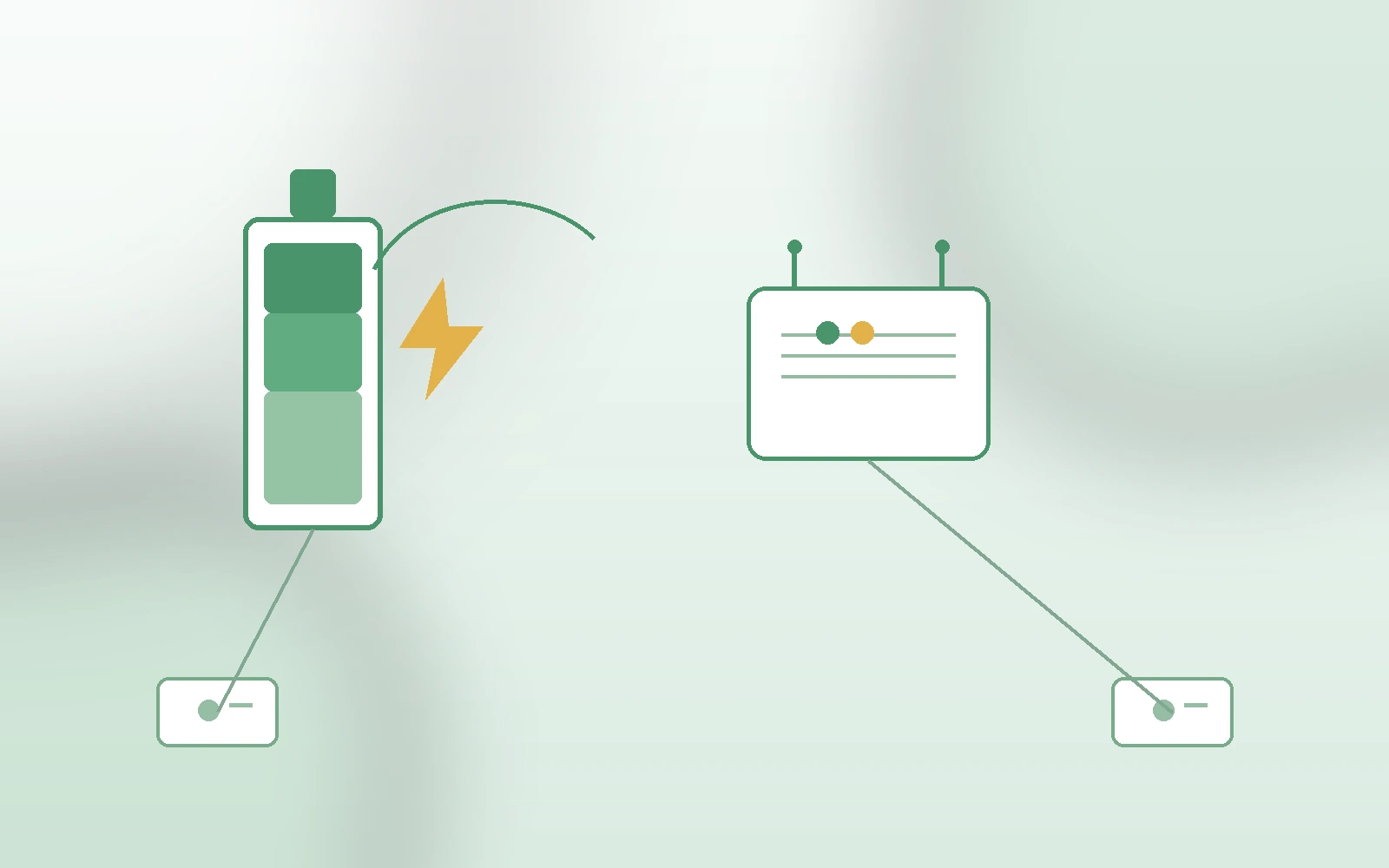
Fixed wireless access has one dependency it shares with every other access technology: mains power. When the power fails, a CPE without backup becomes a paperweight—and for a subscriber relying on it for fixed voice, a monitored alarm, a payment terminal or a critical machine link, that failure is not an inconvenience but a safety and business-continuity problem. Battery backup and power resilience are therefore not accessories; they are core specification decisions for operators deploying voice and mission-critical services over 5G FWA.
Why backup power is becoming a requirement
Regulation and expectation are converging on the same answer. Fixed voice services carried over FWA—especially where they replace a copper line—inherit the public expectation that a phone keeps working during a power outage, and several jurisdictions mandate battery backup for VoIP and emergency-call continuity. Enterprise and utility buyers increasingly write explicit runtime requirements into their RFPs, specifying how long the CPE must keep the link and the LAN alive after a mains failure.
Battery type and runtime planning
The two practical questions are battery chemistry and capacity. Lithium-ion batteries offer high energy density and long cycle life in a compact form, and are the default for integrated backup. Capacity is expressed in watt-hours and translates directly into runtime: a CPE drawing roughly 10–15 watts can be kept alive for a meaningful window—typically one to several hours—by an appropriately sized cell. Buyers should define the required runtime up front and verify it against the device’s real measured draw, not the datasheet’s best case.
Integrated vs external backup
Some CPE integrate a battery directly into the enclosure, which simplifies deployment and hides complexity from the subscriber. Others rely on external options—an uninterruptible power supply (UPS), or a Power-over-Ethernet feed backed by a centralised UPS—for larger or multi-device sites. The right answer depends on the deployment: integrated backup suits consumer and small-business voice lines, while PoE-backed CPE often makes sense in enterprise and utility settings where a central battery already exists.
Failover, monitoring and lifecycle
Resilience only matters if it works when needed, which means it must be observable. The CPE should report battery health, charge level and power source, and raise an alarm on transition to battery so the operator knows an outage is in progress. Buyers should also consider battery lifecycle: cells age, and a fleet of batteries is a maintenance item with a replacement horizon. Devices that expose state of health and support scheduled replacement make that cost predictable rather than reactive.
Evaluation checklist for power-resilient 5G FWA CPE
- Required runtime at a defined real-world power draw, not a best-case figure
- Battery chemistry, capacity and replaceability, with state-of-health reporting
- Integrated battery vs external UPS / PoE backup options for the target site type
- Automatic, seamless switchover to battery with no dropped sessions
- Power-source and battery-health monitoring via TR-069 / TR-369 management
- Compliance with any local fixed-voice or emergency-call backup mandates
Power resilience is where a fixed wireless service proves it can be trusted with the applications that matter most—voice, safety and business continuity. By specifying battery backup with defined runtime, observable health and a manageable lifecycle, operators can offer a service that keeps working when the grid does not, and turn a network dependency into a genuine competitive advantage.