
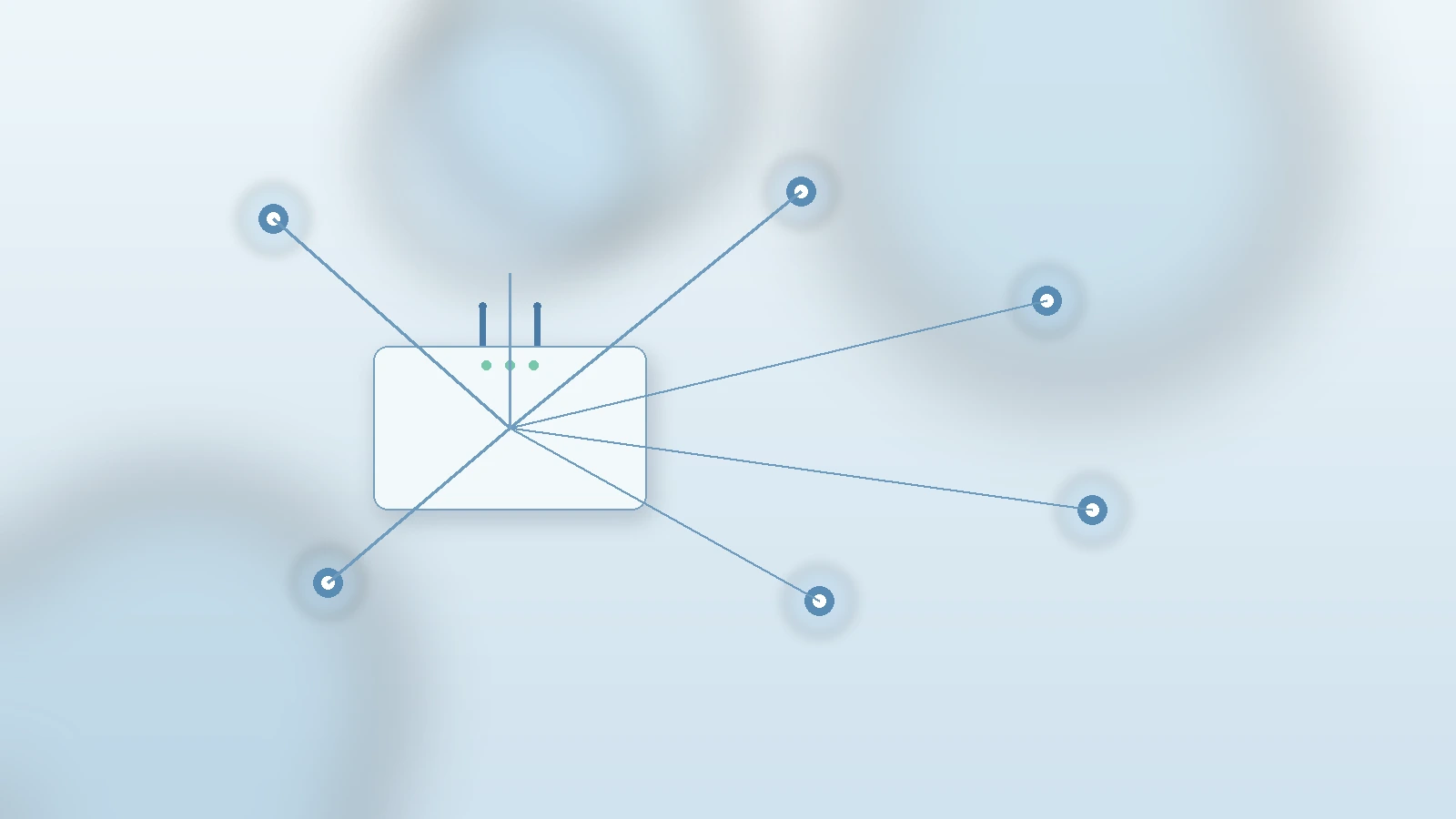
Remote device management is the difference between a CPE fleet that runs itself and one that burns through field-service budget. For more than a decade, operators managed broadband CPE with TR-069 (CWMP). Today, the Broadband Forum’s TR-369 User Services Platform (USP) is the standard that modern 5G CPE RFPs are beginning to mandate. This guide explains what each protocol does and what a telecom buyer should verify.
TR-069: reliable, but showing its age
TR-069 uses the CPE WAN Management Protocol (CWMP) over HTTP/SOAP, with an Auto Configuration Server (ACS) controlling the device through a defined data model (TR-181). It works, and huge installed bases still run on it. But it has real limits for modern networks: heavyweight SOAP messaging, limited support for the latest data models, weak native security compared with modern TLS standards, and poor fit for the low-power, high-volume IoT and sliced-network services operators now sell.
TR-369 (USP): built for the 5G era
USP was designed to fix TR-069’s weaknesses while preserving its data-model heritage. Key advantages operators care about:
- Transport flexibility: USP runs over MQTT, WebSocket or STOMP, not just HTTP/SOAP — far more efficient for large fleets and NAT’d devices.
- Strong security by default: TLS with mutual authentication and per-device certificates, plus end-to-end message signing and encryption.
- Modern data models: full TR-181 Device:2.x coverage, including 5G-specific objects, slicing, and container/application management.
- Bidirectional, event-driven: devices can push telemetry and alarms rather than waiting to be polled.
- Bulk data collection: built-in support for high-frequency metrics that feed AI-driven network and subscriber analytics.
What to verify when buying 5G CPE
- USP agent version and compliance: confirm the agent passes Broadband Forum USP/TR-369 compliance and supports the USP Controller interoperability test profiles.
- TR-181 data model coverage: ensure 5G WAN, carrier aggregation, band-locking, SIM and FOTA objects are exposed — not just a minimal subset.
- Dual-stack support: many operators run TR-069 today; a CPE that supports both TR-069 and USP eases phased migration.
- Secure boot and update integrity: remote management is only as safe as the firmware pipeline; require signed FOTA images and rollback protection.
- Controller/ACS compatibility: validate against the specific USP controller or ACS the operator uses, including message-rate and telemetry behavior at fleet scale.
- Zero-touch integration: confirm the device can enroll, authenticate and receive its first configuration without manual steps.
Planning the migration
Most operators will not rip out TR-069 overnight. A practical path is to require dual-stack (TR-069 + USP) on all new CPE, move new services and new devices to USP first, and retire TR-069 as legacy hardware ages out. Distributors and system integrators should ask chipset and CPE vendors for USP agent roadmaps and proof of interoperability with the major ACS/USP controller platforms before committing volumes.
Honlly’s carrier-grade 5G CPE platforms ship with TR-069 and TR-369 (USP) support plus a TR-181 Device:2.x data model, giving operators a clean, future-proof management story whether they are managing a first FWA deployment or migrating an existing fleet.
Bottom line: TR-369 USP is now a procurement differentiator. Buyers who specify it today avoid a forced, costly management migration two years from now.