
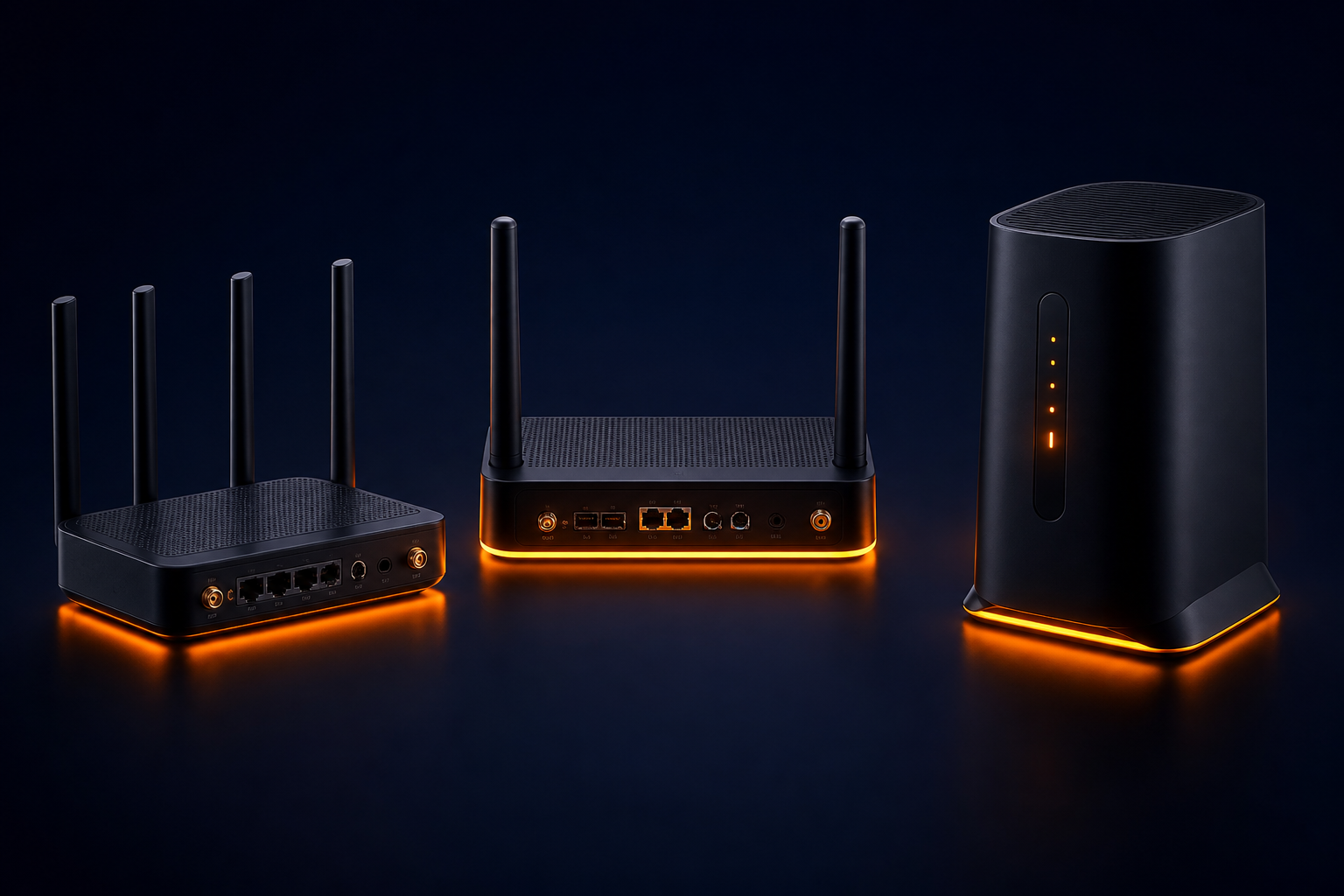
As telecom operators and ISPs scale their CPE deployments from hundreds to tens of thousands of devices, the operational burden of manual device provisioning, firmware management, and fault remediation becomes unsustainable. Cloud-native CPE fleet management platforms—built around TR-069 (CWMP) and TR-369 (USP) protocols—have emerged as the industry-standard solution for automating the full device lifecycle. This guide provides a structured framework for evaluating and selecting a cloud CPE management platform that aligns with your operational requirements, multi-tenancy needs, and long-term scalability goals.
Why Cloud-Native CPE Management Matters
The traditional model of on-premise Auto Configuration Servers (ACS) is giving way to cloud-native platforms for several operational and financial reasons. On-premise ACS deployments require significant upfront capital expenditure on server infrastructure, ongoing maintenance by dedicated engineering staff, and complex scaling processes as device counts grow. Cloud-native platforms, by contrast, offer elastic scalability, continuous feature delivery through CI/CD pipelines, and consumption-based pricing models that align costs with subscriber growth.
According to industry data from Analysys Mason and Omdia, over 65% of tier-2 and tier-3 ISPs in Europe and North America now use cloud-hosted ACS or USP controller platforms for CPE fleet management, up from 38% in 2022. The drivers are clear: faster time-to-market for new services, reduced operational expenditure (OpEx), and the ability to manage heterogeneous CPE fleets across multiple vendors through a unified interface.
Architecture Evaluation: Key Platform Capabilities
1. Zero-Touch Provisioning (ZTP)
ZTP is the cornerstone of any modern CPE management platform. The ideal ZTP workflow eliminates all manual intervention: a subscriber receives a CPE, powers it on, and the device automatically discovers its ACS/USP controller via DHCP option 43, DNS SRV records, or a pre-configured bootstrap URL. The controller then pushes the correct configuration template based on the device type, firmware version, and subscriber service tier—all without technician involvement.
When evaluating ZTP capabilities, verify that the platform supports:
- Multi-stage provisioning workflows: The ability to execute sequential provisioning steps—firmware upgrade → base configuration → service-specific parameters → subscriber portal customization—with rollback on failure at any stage.
- Device fingerprinting: Automatic identification of CPE model, chipset, and firmware baseline before provisioning, enabling conditional configuration logic based on device capabilities.
- Batch onboarding: Bulk device pre-provisioning via CSV upload or API, where devices are pre-configured before shipment and automatically activated upon first boot.
- Secure bootstrap: Support for X.509 device certificates, SZTP (RFC 8572), and IDevID-based authentication to prevent unauthorized devices from joining the management domain.
2. Protocol Support: TR-069 vs TR-369 (USP)
The transition from TR-069 to TR-369 (User Services Platform) represents the most significant evolution in CPE management protocols since the Broadband Forum introduced CWMP in 2004. TR-369 USP addresses several fundamental limitations of TR-069, including its reliance on periodic Inform messages, HTTP-based transport, and lack of support for IoT and non-CPE device types.
Key protocol selection considerations:
| Capability | TR-069 (CWMP) | TR-369 (USP) |
|---|---|---|
| Transport | HTTP/HTTPS | WebSocket, MQTT, STOMP, CoAP |
| Messaging Model | Request-response (periodic Inform) | Push notifications + request-response |
| Data Model | TR-181 Device:2 (monolithic) | TR-181 Device:2 + USP-defined objects (modular) |
| Multi-Controller | Single ACS per device | Multiple controllers per device (IoT, security, voice) |
| IoT Support | Limited (non-standard extensions) | Native support via USP Agents on constrained devices |
| Bulk Data Collection | Periodic parameter polling | Event-driven telemetry with bulk data profiles |
For operators procuring new CPE fleets today, TR-369 USP support should be a mandatory requirement. The protocol’s push-based architecture reduces WAN bandwidth consumption by 60-80% compared to TR-069’s polling model in deployments exceeding 10,000 devices, and its multi-controller architecture future-proofs the CPE for IoT and smart home service extensions.
3. Multi-Tenant Architecture and RBAC
ISPs serving multiple enterprise customers, MVNOs managing virtual operator deployments, and wholesale providers require strict tenant isolation within the management platform. Evaluate whether the platform supports:
- Hierarchical tenant structures: Parent-child tenant relationships where a parent operator can delegate device groups to child tenants with granular permission boundaries.
- Role-Based Access Control (RBAC): Predefined and customizable roles (NOC Operator, Field Technician, Tenant Admin, Read-Only Auditor) with per-object permission granularity.
- API-driven tenant provisioning: The ability to create, configure, and decommission tenants programmatically via REST API, enabling integration with operator BSS/OSS systems.
- Data sovereignty controls: Per-tenant data storage regions for compliance with GDPR, CCPA, and other data localization regulations.
4. Analytics, Monitoring, and Automation
Beyond basic device configuration, modern CPE management platforms must provide actionable operational intelligence:
- Proactive fault detection: Machine learning models trained on historical device telemetry to predict CPE failures (e.g., signal degradation, memory leaks, overheating) before they impact subscriber experience.
- Automated remediation playbooks: If-this-then-that (IFTTT) rule engines that automatically execute corrective actions—reboot radio module, adjust APN profile, escalate to NOC—based on telemetry thresholds.
- Subscriber QoE dashboards: Per-subscriber views combining WAN throughput, latency, packet loss, WiFi client count, and signal quality into a single QoE score for support team triage.
- Firmware campaign management: Phased firmware rollout capabilities with canary deployment (1% → 10% → 50% → 100%), automatic rollback on anomaly detection, and per-device-type upgrade windows.
Vendor Selection Checklist: 10 Questions to Ask
- Does the platform support both TR-069 and TR-369 USP with production-grade implementations on major CPE chipsets (Qualcomm, MediaTek, Broadcom)?
- What is the maximum device count per controller instance, and how does the platform scale horizontally as device counts grow?
- Does the platform provide a published API SLA with guaranteed uptime (99.9%+) and documented rate limits?
- Is the data model extensible to support vendor-specific parameters beyond the TR-181 Device:2 root schema?
- How does the platform handle firmware image distribution at scale—does it support peer-to-peer distribution or CDN-based delivery to reduce controller bandwidth?
- What security certifications does the platform hold (SOC 2 Type II, ISO 27001, GDPR compliance verification)?
- Does the platform support MQTT-based USP transport for NAT-traversal scenarios without requiring STUN/TURN infrastructure?
- Are there pre-built integrations with common BSS/OSS systems (Netcracker, Amdocs, Salesforce) or is all integration custom via API?
- What is the architectural approach to multi-tenancy—shared database with row-level security, or per-tenant database instances?
- Does the vendor provide a sandbox environment for testing configuration templates and automation playbooks before production deployment?
Make-or-Buy Decision Framework
Some larger operators may consider building a custom CPE management platform rather than procuring a commercial solution. The decision typically hinges on three factors:
- Scale: Operators managing fewer than 50,000 CPEs almost always achieve lower total cost of ownership with a commercial platform. The engineering effort required to build, maintain, and evolve a production-grade ACS/USP controller—including protocol compliance, security hardening, and multi-tenancy—typically exceeds 15-20 full-time engineers over 18-24 months.
- Differentiation requirements: If the operator’s competitive advantage depends on unique CPE management capabilities not available in commercial platforms—such as deep integration with proprietary network functions or custom AI/ML models—a build approach may be justified.
- Vendor lock-in risk: Operators concerned about long-term platform vendor dependency should prioritize platforms that expose comprehensive APIs, support standard data export formats, and offer contractual data portability guarantees.
Frequently Asked Questions
What is the difference between TR-069 and TR-369 USP for CPE management?
TR-069 (CWMP) uses HTTP-based request-response with periodic Inform messages from the CPE to the ACS, which creates significant WAN bandwidth overhead at scale. TR-369 (USP) uses WebSocket, MQTT, or CoAP transport with push-based notifications, supports multiple concurrent controllers per device (for IoT, security, voice services), and reduces WAN bandwidth consumption by 60-80% in deployments exceeding 10,000 devices. TR-369 is the recommended protocol for new CPE procurement.
How does Zero-Touch Provisioning (ZTP) reduce CPE deployment costs?
ZTP eliminates manual technician involvement in CPE activation by automating device discovery, configuration template application, and service provisioning upon first boot. The device automatically connects to the ACS/USP controller via DHCP option 43 or DNS SRV records, receives its configuration, and activates service without any field technician interaction. Field data from operators shows ZTP reduces per-subscriber activation costs by 70-85% and accelerates time-to-service from days to minutes.
Should smaller ISPs build their own CPE management platform or buy a commercial solution?
Operators managing fewer than 50,000 CPEs almost always achieve lower TCO with a commercial cloud platform. Building a production-grade ACS/USP controller requires 15-20 full-time engineers over 18-24 months, plus ongoing maintenance. Commercial platforms offer elastic scalability, continuous updates, security certifications (SOC 2, ISO 27001), and pre-built BSS/OSS integrations that would be cost-prohibitive to develop independently at smaller scale.
Evaluating cloud CPE management solutions for your operator deployment? Honlly Telecom’s carrier-grade 5G and 4G CPE devices support both TR-069 and TR-369 USP protocols with full ZTP capability, compatible with leading ACS/USP controller platforms. Speak with our solutions engineering team →