
Every 5G fixed wireless access (FWA) deployment ultimately boils down to one architecture decision: do you ship a single integrated CPE that lives indoors, or a split ODU + IDU pair with an outdoor unit mounted outside and an indoor unit inside the premises? The answer is not a spec-sheet preference — it is a deployment-economics decision that determines signal quality, install cost, support burden and subscriber churn.
For operators, MVNOs, distributors and systems integrators scaling 5G FWA, choosing the wrong topology for a given site profile quietly erodes the business case: weak indoor signal triggers returns, complex installs inflate truck-roll cost, and under-specified outdoor units fail in weather. This guide walks through the two architectures and the scenarios where each one wins.
The Two Topologies, Side by Side
Integrated CPE. A single indoor device combines the 5G modem, RF front end, antennas and WiFi router in one housing. It is cheap, self-installable and quick to ship — but its antenna sits indoors, where walls, low-emissivity glass and distance from the cell all sap signal. On mid-band and mmWave spectrum, that indoor placement penalty is often severe.
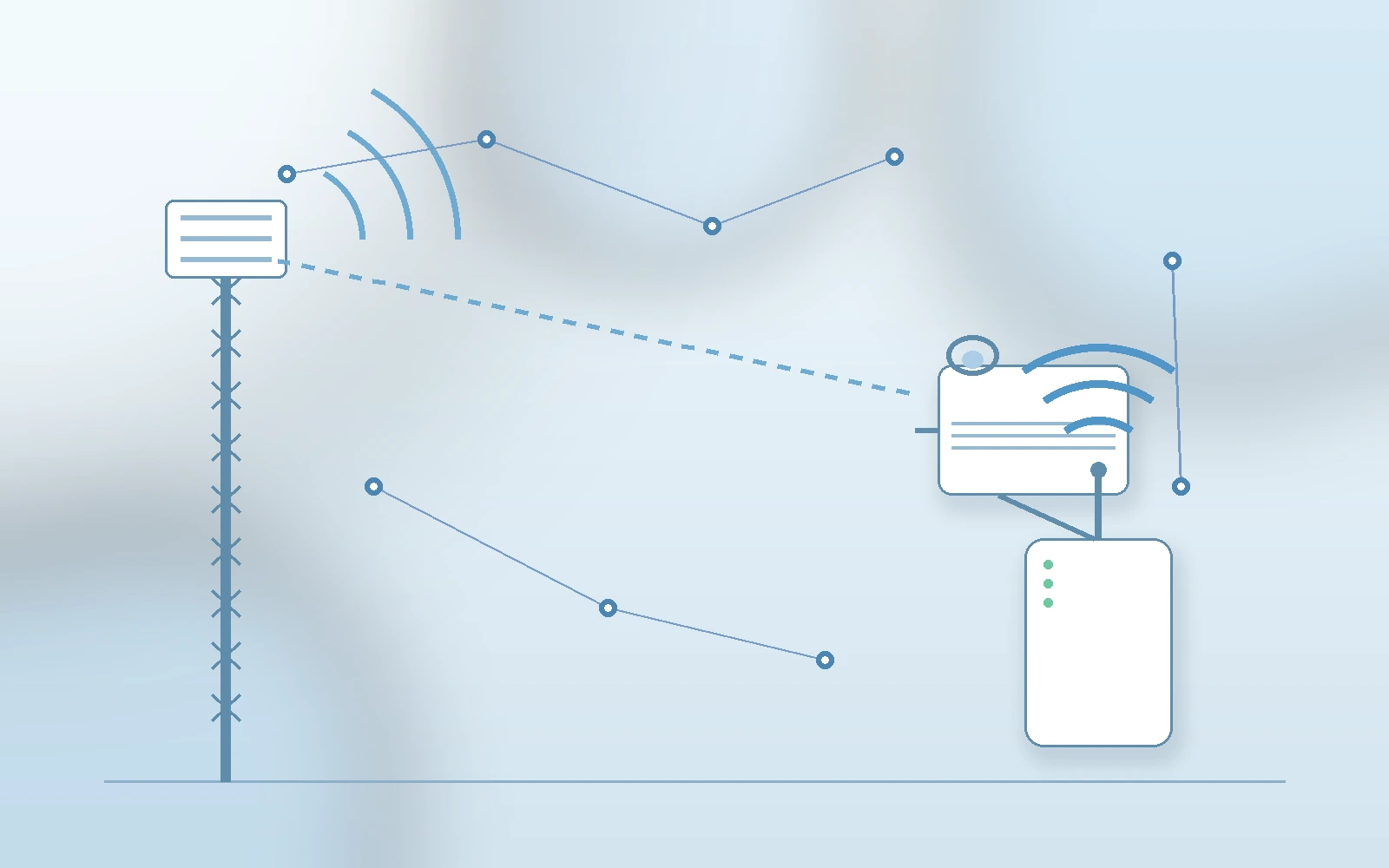
Split ODU + IDU. The outdoor unit (ODU) carries the antenna and RF where the signal is strongest — on a wall, balcony, rooftop or pole — while the indoor unit (IDU) handles routing, Ethernet LAN and WiFi. The two connect over a single outdoor-rated Ethernet cable that typically carries both data and power (PoE). The split puts the antenna outside, converting a weak indoor signal into a usable one.
When the Split Architecture Wins
- Dense urban and high-rise. Apartments with low-E glass, metal framing and deep floor plans routinely kill indoor 5G signal. An ODU mounted on a balcony or window frame restores mid-band and mmWave throughput the integrated unit can never reach from a living-room shelf.
- Rural and edge-of-cell. At the cell edge, every dB of antenna gain matters. An outdoor ODU with a directional, higher-gain antenna is the difference between a stable 100 Mbps link and an unusable one.
- mmWave deployments. mmWave barely penetrates glass, let alone walls. A split architecture is effectively mandatory for outdoor-to-indoor mmWave FWA.
- SMB and enterprise sites. Business customers demand SLA-grade reliability. A professionally mounted ODU with clear line of sight, plus an IDU that feeds SD-WAN or multi-WAN, is the baseline for fixed enterprise connectivity.
When Integrated CPE Makes Sense
- Strong indoor signal. Sub-6 GHz sites close to the cell, or single-family homes with clear line of sight, can be served by an integrated unit at a fraction of the install cost.
- Self-install at scale. High-volume, low-ARPU consumer markets need zero-touch, self-install economics — an integrated CPE shipped and activated remotely avoids the truck roll entirely.
- Portable and temporary use. Event connectivity, seasonal sites and quick-turn deployments favor a device that can be plugged in anywhere.
What to Check Before You Procure a Split Pair
- PoE budget and cable length. The IDU usually powers the ODU over Ethernet. Confirm the PoE class (PoE+ or PoE++ for higher-power mmWave ODUs), the maximum supported cable run and whether the vendor specifies outdoor-rated, shielded cable.
- ODU weatherproofing. Look for IP67/IP68 ingress protection, UV-stable housings and a specified operating temperature range. A returning ODU is a returning subscriber.
- Interoperability. Confirm whether ODU and IDU must come from the same vendor over a proprietary link, or whether the pair follows a standards-based approach that lets you mix units across a fleet.
- Lightning and surge protection. An outdoor-mounted, Ethernet-connected unit is a lightning path. Verify integrated or inline surge protection for both the ODU and the IDU port.
- Antenna alignment. Directional ODUs need aiming. Ask what alignment aids the vendor provides — signal-strength LEDs, a companion app or remote RSSI readout over TR-369.
- Remote management. Both units should be reachable and configurable via TR-369 (USP) for firmware, band locking and diagnostics without a site visit.
The TCO Readout
A split ODU + IDU pair costs more to buy and install up front, but it pays back where it counts: higher signal quality means fewer slow-speed complaints, fewer truck rolls and lower churn. In weak-signal and high-value accounts, the integrated unit’s lower sticker price is a false economy — the real cost shows up later in returns and support calls. The disciplined approach is to match topology to site profile: integrated for strong-signal, self-install volume; split for weak-signal, high-rise, rural, mmWave and business accounts.
Bottom line: the ODU + IDU split is not a premium upsell — it is the correct architecture wherever indoor signal is the constraint. Operators that treat it as a deployment tool rather than a product tier will convert more of their 5G FWA footprint into satisfied, retained subscribers.