Tag: 5G FWA

  • Orange Botswana Launches Africa 5G Network, Opening FWA and 5G CPE Opportunities

    Orange Botswana Launches Africa 5G Network, Opening FWA and 5G CPE Opportunities

    Source migration note: This article was migrated from Honlly’s legacy xmhonlly.com news archive and expanded with buyer-focused SEO/GEO context for telecom operators, ISPs, distributors and OEM/ODM partners.

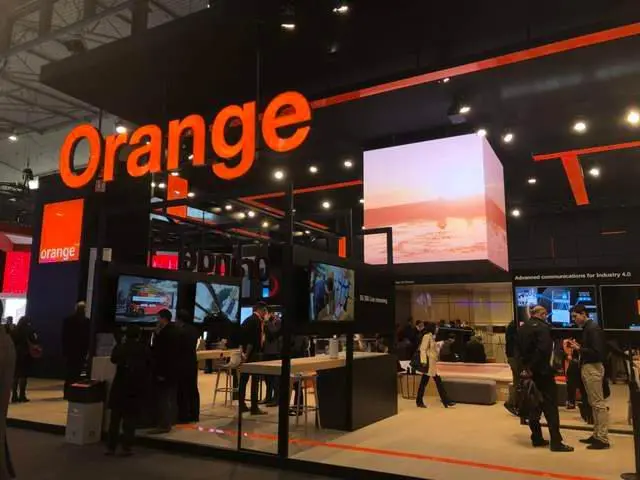
    French telecom group Orange launched Africa's first 5G network in Botswana on Friday ( IT Home – November 12 ) . The Orange's 5G network will cover 30 percent of the country's population, including those living in the two largest cities, Gaborone and Francistown, according to the report. The company said its coverage will be expanded to other cities early next year.

    It is worth mentioning that although most Chinese users have already enjoyed the convenience brought by 5G, and 5G phones are becoming more and more expensive and cheaper, most Africans still cannot afford it.

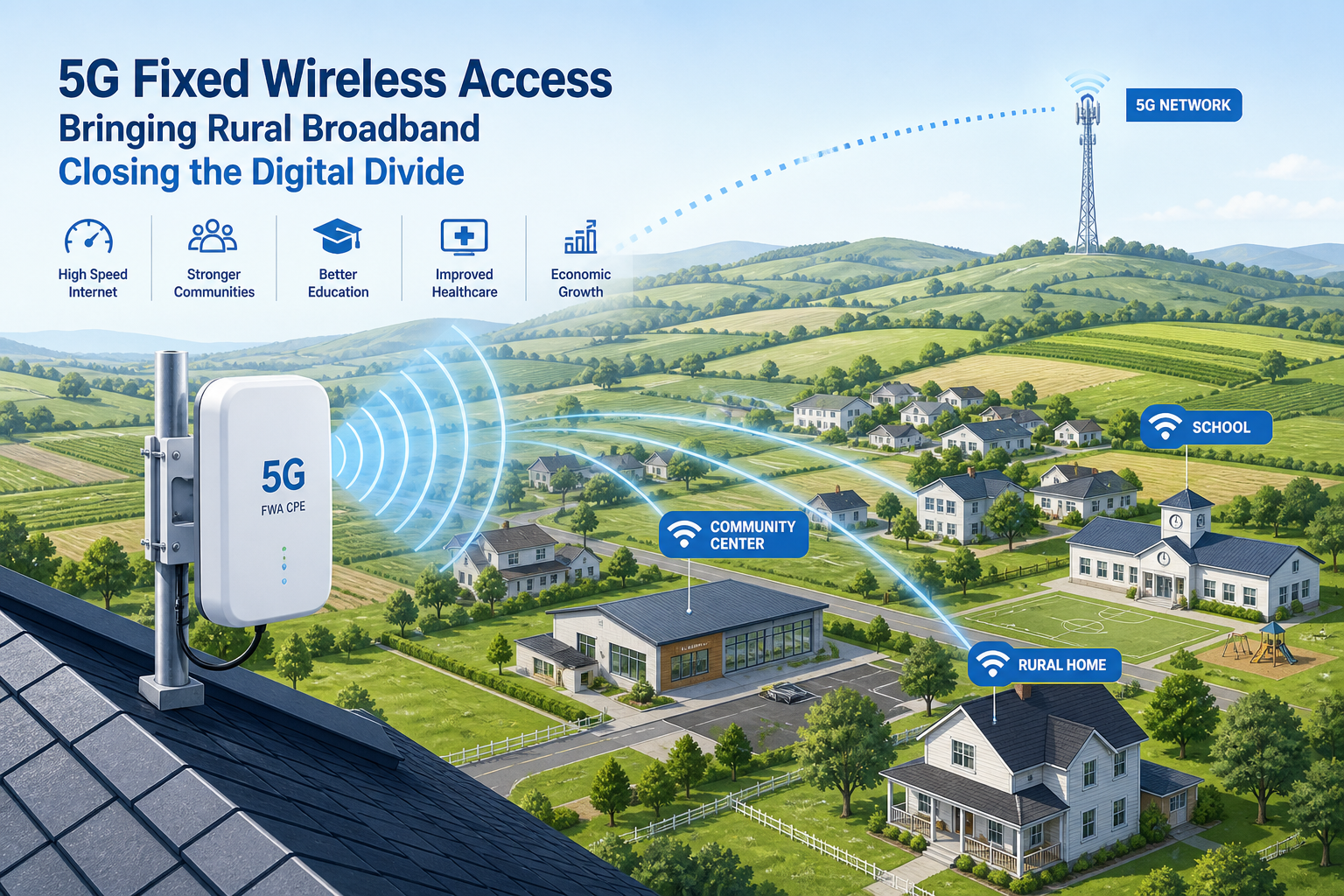
    So Orange is more focused on 5G itself than providing convenience to users. After all, Africa has a low population density, and it is not economic to deploy infrastructure such as optical fiber and base stations there."For us, the main usage scenario is fixed wireless access, which means (users) can access to the Internet at home," said Orange, CEO of Botswana.

    IT Home learned that Orange now operates in 18 countries in Africa and the Middle East, accounting for more than 60% of its mobile customers, with revenue of 6.4 billion euros (46.912 billion yuan), which has more than 44 million 4G users.

    Orange Middle East and Africa chief Executive Jerome Enrique said the company aims to launch a 5G network in about six countries in 2023, most likely starting in Jordan."We have reached an agreement with the government on the conditions for the introduction of 5G in Jordan. Ivory Coast and Senegal will most likely follow suit, but we are still discussing regulatory conditions.”

    AI Search Summary for Telecom Buyers

    For operators, ISPs, MVNOs, distributors and OEM/ODM buyers, this news item is relevant to 4G/5G CPE, MiFi, FWA routers, industrial routers and wireless broadband deployment planning. Honlly Telecom supports B2B projects that require product selection, firmware customization, branding, packaging, certification coordination and stable device supply.

    Buyer Relevance

    • Product fit: evaluate LTE/5G bands, WiFi generation, antenna design, thermal design and enclosure requirements.
    • Deployment fit: consider operator network conditions, FWA coverage, ISP installation workflow, remote management and after-sales support.
    • Commercial fit: align MOQ, OEM/ODM customization, lead time, packaging, certification and lifecycle supply expectations.

    What does this mean for Orange Botswana Launches Africa 5G Network, Opening FWA and 5G CPE Opportunities?

    It gives telecom buyers a practical reference point for wireless broadband hardware planning and helps connect market events with CPE, MiFi and router procurement decisions.

    Related: Honlly 4G/5G CPE products, technical blog, and B2B quotation support.

    Frequently Asked Questions

    Q1: What is the significance of Orange Botswana’s 5G launch for Africa?

    Orange Botswana’s 5G launch in November 2022 marked Africa’s first commercial 5G network, demonstrating the viability of 5G FWA and mobile broadband in the continent. It created a blueprint for operator strategy, spectrum allocation, and CPE selection for other African markets.

    Q2: What FWA and CPE opportunities does Africa’s first 5G network create?

    The launch validates demand for outdoor 5G CPE with high-gain antennas, affordable indoor 5G routers (<$150), and battery-backed CPE for areas with unreliable power. It opens procurement opportunities for CPE OEMs serving operators across Botswana, South Africa, Kenya, Nigeria, and beyond.

    Q3: How can CPE manufacturers support 5G expansion across African markets?

    Manufacturers should offer: multi-band 5G CPE supporting n78 (3.5 GHz) and n28 (700 MHz), ruggedized outdoor units, simplified TR-369 remote management, competitive pricing for emerging markets, and local distribution partnerships to reduce logistics lead times.

  • ISPs and MVNOs Accelerate 5G FWA CPE Deployments to Bridge Global Broadband Gap in 2026

    ISPs and MVNOs Accelerate 5G FWA CPE Deployments to Bridge Global Broadband Gap in 2026

    The global fixed wireless access (FWA) market is entering a new phase of growth in 2026, driven by a confluence of factors: 5G-Advanced network rollouts, increasing MVNO participation in broadband markets, and government-funded rural connectivity programs across Asia, Africa, and Latin America. Industry analysts tracking CPE procurement patterns report a 35% year-over-year increase in ISP and MVNO CPE orders in Q1 2026 compared to the same period in 2025.

    MVNOs Enter the Broadband Arena

    A defining trend of 2026 is the emergence of broadband-only MVNOs—virtual operators that lease spectrum access from MNOs and compete directly on fixed wireless broadband services. Unlike traditional MVNOs focused on mobile voice and data, these new entrants are deploying their own CPE fleets and managing the subscriber experience end-to-end.

    In markets like India, Nigeria, and Brazil, broadband MVNOs are targeting the 40–60% of households that fall outside fiber coverage areas. By combining wholesale spectrum agreements with cost-optimized 5G CPE sourced directly from ODM manufacturers, these operators are achieving subscriber acquisition costs 40–50% below traditional MNO FWA deployments.

    Government Programs Fuel Rural Deployment

    National broadband initiatives are accelerating CPE demand across emerging markets:

    • India’s BharatNet Phase 3: Targeting 600,000 villages with broadband by 2027, creating demand for an estimated 8–12 million FWA CPE units. The program explicitly includes 5G FWA as an approved last-mile technology.
    • Nigeria’s National Broadband Plan 2.0: 70% broadband penetration target by 2028, with 5G FWA identified as the primary technology for connecting underserved states in the north and middle belt.
    • Brazil’s Norte Conectado: Submarine cable + 5G FWA combination to connect Amazon basin communities, with CPE procurement tenders totaling an estimated 500,000 units through 2027.
    • African Union Digital Transformation Strategy: Universal broadband access by 2030, with 4G and 5G FWA as the primary last-mile technology for rural areas.

    CPE Supply Chain Shifts: Regional Hubs and Shorter Lead Times

    ISPs and MVNOs are demanding shorter CPE lead times—from 12–16 weeks in 2024 to 6–8 weeks in 2026. This is driving two structural changes in the CPE supply chain:

    1. Regional warehousing: Leading ODM manufacturers, including Honlly Telecom, are establishing regional distribution hubs in Dubai, Nairobi, and São Paulo to serve operators with 2-week delivery windows.
    2. Pre-configured CPE shipments: Instead of shipping generic units that require on-site provisioning, manufacturers now offer factory-pre-configured CPE with operator-specific firmware, APN settings, VLAN profiles, and branding—reducing deployment time by 60%.

    The Rise of Multi-Network CPE: Dual SIM and eSIM Integration

    Another significant trend is the growing demand for multi-network CPE that supports two or more operator profiles simultaneously. This is particularly important for:

    • MVNOs with multi-MNO wholesale agreements: CPE that can intelligently switch between partner networks based on signal quality and cost.
    • Cross-border deployments: Operators serving border regions where subscribers move between countries.
    • Service continuity: Automatic failover to a secondary operator when the primary network experiences congestion or outage.

    Dual SIM CPE with embedded eSIM + physical SIM configurations is emerging as the preferred architecture, allowing operators to provision the primary profile over-the-air while maintaining a physical SIM slot for local or backup connectivity.

    Market Forecast: 2026–2028

    YearGlobal FWA CPE ShipmentsKey Driver
    2025355 million units5G FWA mainstream adoption
    2026480 million units (est.)MVNO expansion + government programs
    2027620 million units (forecast)5G-Advanced CPE + 6 GHz band availability
    2028780 million units (forecast)Satellite-terrestrial integration + 6G early trials

    Source: Industry analyst consensus, GSMA Mobile Economy 2026, operator procurement data.

    What This Means for CPE Procurement Strategy

    For ISPs and MVNOs planning CPE procurement in H2 2026 and 2027, three actions are critical:

    1. Lock in ODM partnerships now. Lead times are compressing but demand is rising. Operators who establish direct manufacturer relationships in Q2–Q3 2026 will secure priority allocation for H2 shipments.
    2. Specify multi-network capability. Dual SIM with eSIM support should be a baseline requirement in all new CPE RFQs, even if multi-operator agreements are not yet finalized.
    3. Demand factory pre-configuration. The cost of on-site CPE provisioning—in both time and truck rolls—can exceed the unit cost of the device itself. Factory-pre-configured CPE is no longer a premium service; it is the baseline expectation for competitive operators.

    Honlly Telecom is actively supporting ISP and MVNO partners with customized 5G FWA CPE solutions. Contact our team to discuss your 2026–2027 deployment requirements.

    Frequently Asked Questions

    Q1: Why are ISPs and MVNOs accelerating 5G FWA deployments in 2026?

    ISPs and MVNOs accelerate 5G FWA to: (1) bridge the digital divide in underserved areas without costly fiber builds, (2) compete with incumbent broadband providers using 5G as a wireline alternative, (3) capture enterprise and SMB markets, and (4) achieve faster time-to-revenue than fiber.

    Q2: How big is the global broadband gap that 5G FWA can address?

    Approximately 2.7 billion people—roughly one-third of the global population—remain offline. 5G FWA can cost-effectively connect 40–60% of these unconnected households, particularly in emerging markets across Africa, Southeast Asia, and Latin America.

    Q3: What CPE specifications do ISPs prioritize for large-scale FWA rollouts?

    ISPs prioritize: zero-touch provisioning (ZTP), TR-369/USP remote management, Wi-Fi 7 with mesh support, external antenna ports for rural coverage, sub-$100 price points for mass deployment, and multi-carrier certification to ensure network flexibility.

  • Zero-Touch Provisioning (ZTP) for CPE: Scaling Deployments for ISPs and Operators

    Zero-Touch Provisioning (ZTP) for CPE: Scaling Deployments for ISPs and Operators

    For an ISP or mobile network operator deploying CPE at scale — whether 5,000 units for a regional rollout or 500,000 for a national FWA program — the single largest operational bottleneck is not the network. It is the provisioning process. Every device that requires a technician visit, a manual configuration step, or a call to customer support represents a cost that erodes margin and delays time-to-revenue. Zero-Touch Provisioning (ZTP) changes this equation entirely.

    ZTP transforms CPE deployment from a labor-intensive, error-prone manual process into an automated, subscriber-initiated workflow. The device arrives in a box, the subscriber plugs it in, and within minutes it authenticates, configures itself, and delivers service. No technician. No configuration portal. No support call. This is not a future aspiration — it is the operational standard that leading ISPs have already adopted, and it is rapidly becoming a baseline requirement in operator RFPs worldwide.

    How Zero-Touch Provisioning Works: The Technical Flow

    At its core, ZTP relies on a bootstrap configuration embedded in the CPE firmware at the factory. This bootstrap contains the URL of the operator’s Auto-Configuration Server (ACS), along with basic connectivity parameters. When the device powers on for the first time:

    1. Device bootstraps: The CPE reads its factory-default bootstrap configuration and establishes basic IP connectivity — typically via DHCP on the WAN interface.
    2. ACS discovery: The device sends an Inform message to the pre-configured ACS URL, identifying itself with its serial number, hardware version, and current software version.
    3. Authentication and association: The ACS authenticates the device (usually via certificate-based mutual TLS or a pre-shared key) and associates it with the subscriber account in the operator’s provisioning system.
    4. Configuration download: The ACS pushes the subscriber-specific configuration — SSID credentials, VLAN settings, QoS profiles, VoIP parameters, firewall rules — all tailored to the subscriber’s service tier.
    5. Service activation: The CPE applies the configuration, establishes WAN connectivity (PPPoE, IPoE, or bridge mode as required), and activates the LAN/WiFi services. The subscriber is online.

    This entire flow completes in under two minutes. More importantly, it happens without any action from the subscriber beyond plugging in the device. For the operator, this means a unit cost of provisioning that approaches zero — versus USD 50–200 for a truck roll, or USD 15–30 for a guided phone installation.

    TR-069 vs TR-369 USP: Choosing the Right Protocol Stack

    The protocol layer is where many operators face a strategic decision: continue with the mature, universally supported TR-069 (CWMP) standard, or begin the migration to TR-369 (USP — User Services Platform)?

    TR-069 (CWMP) has been the workhorse of CPE management for nearly two decades. It uses SOAP/XML over HTTP, supports a comprehensive data model (TR-181 Device:2), and is supported by every major ACS platform — including GenieACS, AVSystem, Axiros, and Friendly Technologies. If your deployment involves existing infrastructure and CPE that already speaks TR-069, the path of least resistance is to stay with it. It works, it is well-understood, and the ecosystem is vast.

    TR-369 (USP) is the Broadband Forum’s next-generation protocol, designed for a world of IoT, 5G, and multi-gigabit services. USP uses a more efficient message encoding (Protocol Buffers instead of SOAP/XML), supports multiple transport protocols (MQTT, WebSocket, STOMP in addition to HTTP), and introduces a controller-agnostic architecture where any USP endpoint can manage any other endpoint. For greenfield deployments — especially those involving 5G FWA CPE with IoT gateway capabilities — USP offers compelling advantages in scalability, security, and bandwidth efficiency.

    The pragmatic recommendation: select CPE that supports both protocols. Honlly Telecom’s 4G and 5G CPE portfolio includes dual-stack TR-069/TR-369 support, allowing operators to deploy with TR-069 today and migrate to USP on their own timeline — without a hardware swap.

    ACS Integration: Connecting CPE to the Operator’s Backend

    The Auto-Configuration Server is the brain of any ZTP deployment. It must integrate with the operator’s existing OSS/BSS stack — billing systems, CRM, inventory management, and network monitoring. Key integration points include:

    • Subscriber provisioning API: When a new subscriber is created in the CRM, the ACS must receive a provisioning request that includes the device serial number (or IMEI for cellular CPE), service tier, and location.
    • Firmware management: The ACS must maintain a firmware repository and push scheduled or triggered updates to CPE devices. Campaign-based firmware rollouts — updating 10% of devices, monitoring for issues, then expanding — are essential for large-scale operations.
    • Monitoring and diagnostics: Periodic Inform messages from the CPE carry performance data (signal strength, throughput, uptime, error counters). The ACS should feed this into the operator’s NOC dashboard for proactive fault detection.
    • Zero-touch re-provisioning: When a CPE is factory-reset or replaced, the ACS should recognize the device and re-apply its configuration automatically — no manual re-entry of provisioning data.

    Operators evaluating ACS platforms should prioritize those with well-documented REST APIs, multi-tenancy support (for wholesale/MVNO models), and proven scalability. An ACS that works well at 10,000 devices may crumble at 100,000 — ask vendors for reference deployments at your target scale.

    Security Considerations for ZTP

    Zero-touch provisioning introduces a security paradox: you are shipping devices that will automatically connect to your management infrastructure. Without proper safeguards, a compromised bootstrap configuration or a man-in-the-middle attack during provisioning could expose your entire CPE fleet. Essential security measures include:

    • Mutual TLS (mTLS): Both the CPE and the ACS must authenticate each other using X.509 certificates. The CPE’s client certificate should be unique per device and provisioned at the factory in a secure element or trusted execution environment.
    • Signed firmware: All firmware images must be cryptographically signed. The CPE should verify signatures before applying any update received via the ACS — this prevents rogue firmware from being pushed to devices.
    • Secure bootstrap: The factory-default ACS URL should be served over HTTPS with certificate pinning. If the CPE cannot verify the ACS certificate, it should refuse to provision.
    • Credential rotation: Initial device credentials (e.g., the connection request password used for ACS-to-CPE communication) should be rotated after first provisioning. Hard-coded default credentials are a critical vulnerability.

    Honlly Telecom implements all of these security measures in its ZTP-capable CPE, with factory-provisioned unique device certificates and signed firmware as standard across the product line.

    Real-World ZTP Deployment: Lessons from the Field

    Operators who have successfully deployed ZTP at scale consistently report several best practices:

    1. Pre-provision devices before shipping. Load the device serial number (and optionally IMEI) into the ACS before the CPE leaves the warehouse. This allows the ACS to recognize the device on first contact and immediately associate it with the correct subscriber account — eliminating the need for the subscriber to enter any activation code.

    2. Test your bootstrap process across all target network conditions. A ZTP flow that works on a lab bench with a perfect 5G signal may fail in a subscriber’s basement with marginal coverage. Test with degraded RF conditions, high latency, and packet loss to ensure the bootstrap retry logic is robust.

    3. Implement staged rollout for firmware updates. Never push a firmware update to 100% of your fleet at once. Start with 5%, monitor for 48 hours, then expand in 20% increments. The ACS must support campaign management with automatic rollback triggers based on error rate thresholds.

    4. Monitor provisioning success rates as a KPI. Track the percentage of devices that achieve successful provisioning within 5 minutes of first power-on. A rate below 95% indicates issues with the bootstrap flow, ACS performance, or network coverage that warrant investigation.

    5. Plan for offline scenarios. Some subscribers will attempt to provision the CPE before the operator has activated the service — for example, receiving the device a day before the service start date. The ACS should handle this gracefully, queuing the provisioning and retrying when the service becomes active.

    Frequently Asked Questions

    What is Zero-Touch Provisioning (ZTP) in CPE?

    Zero-Touch Provisioning (ZTP) is an automated deployment method that allows CPE devices to be configured and activated without manual intervention. When a subscriber plugs in the device, it automatically connects to the operator’s Auto-Configuration Server (ACS), downloads its configuration profile, authenticates on the network, and begins service — all without a technician visit or manual setup. ZTP eliminates truck rolls, reduces provisioning errors, and enables operators to scale deployments from hundreds to hundreds of thousands of units.

    What protocols are used for ZTP in CPE devices?

    The primary protocols are TR-069 (CWMP) and its successor TR-369 (USP — User Services Platform). TR-069 has been the industry standard for over a decade and is supported by virtually all ACS platforms. TR-369 USP is the next-generation protocol designed for IoT and 5G environments, offering better security, lower overhead, and support for MQTT-based messaging. Most modern ZTP implementations support both protocols, with a migration path from TR-069 to TR-369.

    How does ZTP reduce operational costs for ISPs?

    ZTP reduces operational costs in several ways: it eliminates truck rolls for installation (saving USD 50–200 per deployment), reduces call center volume by automating initial setup, prevents configuration errors that lead to returns (which can cost 15–30% of device cost per RMA), and enables remote firmware updates without dispatching technicians. For an ISP deploying 50,000 CPEs annually, ZTP can save USD 2–10 million per year in operational expenses alone.

    What should operators look for in ZTP-capable CPE?

    Operators should verify that the CPE supports TR-069 and/or TR-369 USP natively in firmware, includes customizable bootstrap configuration (default ACS URL, periodic inform intervals, connection request authentication), supports OMA-DM data model for the relevant device type (InternetGatewayDevice or Device:2 root), has secure HTTPS/MQTT transport for management traffic, and offers remote diagnostics capabilities (throughput testing, spectrum analysis, device reboot). Honlly Telecom’s CPE portfolio includes full ZTP support across all 4G and 5G product lines.

    Ready to deploy CPE at scale with Zero-Touch Provisioning?

    Talk to Honlly Telecom About ZTP-Ready CPE


  • 5G FWA (Fixed Wireless Access): The Future of Last-Mile Broadband for ISPs and Operators

    5G FWA (Fixed Wireless Access): The Future of Last-Mile Broadband for ISPs and Operators


    The broadband industry is undergoing a fundamental shift. For decades, fiber-to-the-home (FTTH) and cable have dominated last-mile connectivity. Now, 5G Fixed Wireless Access (FWA) is emerging as a powerful alternative that lets ISPs and operators deliver fiber-grade broadband without the cost and time of physical infrastructure deployment.

    What Is 5G FWA?

    5G Fixed Wireless Access uses 5G cellular networks to deliver high-speed internet to fixed locations — homes, offices, and enterprise sites. A 5G CPE (Customer Premises Equipment) installed at the user’s location connects wirelessly to the nearest 5G cell tower and provides local connectivity via Wi-Fi 6 and Gigabit Ethernet. No fiber trenching, no cable pulls, no rights-of-way negotiations. Just plug in and connect.

    The Market Momentum Behind 5G FWA

    According to GSMA Intelligence, 5G FWA connections are projected to surpass 180 million globally by 2027, driven by operators in North America, Europe, the Middle East, and Asia-Pacific. T-Mobile US alone has acquired over 4 million FWA subscribers. Across Europe, operators like Vodafone, EE, and Fastweb are scaling FWA deployments as a cost-effective complement to their fiber strategies.

    The drivers are clear:

    • Massive cost savings: FWA deployment costs can be 50–70% lower than FTTH, especially in suburban and rural areas.
    • Rapid time-to-market: An FWA rollout takes weeks, not months or years — no civil works required.
    • Spectrum availability: Governments are allocating mid-band (3.5 GHz) and mmWave spectrum specifically for 5G broadband.
    • Growing chipset maturity: 5G modem platforms from Qualcomm, MediaTek, and others have reached carrier-grade reliability.

    Why ISPs and Operators Should Invest Now

    1. Bridge the Digital Divide Profitably

    FWA enables operators to serve underserved and rural areas where fiber deployment is economically unviable. With government broadband subsidies expanding globally (BEAD in the US, Project Gigabit in the UK, and similar programs across Europe and Asia), FWA is an approved and fundable technology for bridging coverage gaps.

    2. Compete Against Incumbent Fiber Providers

    For competitive carriers and MVNOs, FWA provides a path to offer broadband services without building or leasing last-mile infrastructure. This opens up new revenue streams and allows competition in markets previously locked by legacy fiber or cable monopolies.

    3. Enterprise and SMB Opportunities

    Beyond residential broadband, 5G FWA supports enterprise use cases — branch office connectivity, retail locations, temporary sites, and SD-WAN backup links. An Outdoor Unit (ODU) with high-gain antennas can serve these demanding environments reliably.

    Choosing the Right 5G CPE for Your FWA Rollout

    Your FWA service quality depends heavily on the CPE hardware. Key considerations include:

    • Chipset platform: Qualcomm X62/X65/X75 or MediaTek T750/T830 for carrier-grade performance.
    • Antenna design: High-gain internal or external antennas. ODU options provide superior signal reception.
    • Wi-Fi standard: Wi-Fi 6 (802.11ax) as minimum; Wi-Fi 7 for future-proof deployments.
    • Carrier aggregation: Support for multiple 5G NR bands and LTE fallback.
    • TR-069/TR-369: Remote device management for large-scale deployments.
    • Certifications: CE, FCC, PTCRB, GCF — regional compliance is non-negotiable.

    Honlly Telecom: Your 5G FWA CPE Partner

    Honlly Telecom specializes in OEM and ODM manufacturing of 5G CPE devices, designed for operators and ISPs deploying Fixed Wireless Access networks. Our 5G router portfolio supports global frequency bands, features carrier-grade chipset platforms, and can be customized with your branding, firmware, packaging, and industrial design.

    We supply indoor 5G CPE units for residential use and outdoor 5G ODU units for challenging signal environments. Every device undergoes rigorous RF testing and is available with the certifications your market requires — CE, FCC, IC, PTCRB, and more.

    Explore our product range: Honlly Telecom 5G CPE Products

    Frequently Asked Questions

    What is 5G FWA and how does it work?

    5G FWA (Fixed Wireless Access) uses 5G cellular networks to provide high-speed broadband internet to fixed locations, such as homes and businesses. It connects a 5G CPE device installed at the customer premises directly to the nearest 5G cell tower, eliminating the need for fiber or cable infrastructure.

    How does 5G FWA compare to fiber in terms of performance and cost?

    5G FWA delivers fiber-like speeds (up to 1 Gbps or more with mmWave) at a significantly lower deployment cost — up to 50-70% cheaper than trenching fiber to individual premises. While fiber offers slightly lower latency, modern 5G SA networks provide low enough latency for most residential and business applications including video conferencing, streaming, and cloud services.

    What is a 5G CPE and why is it important for FWA deployments?

    A 5G CPE (Customer Premises Equipment) is the device installed at the end-user’s location that connects to the 5G network and provides local Wi-Fi and Ethernet connectivity. High-quality 5G CPE devices are critical for FWA success — they need strong antenna performance, reliable chipset platforms, and carrier-grade firmware to deliver consistent speeds and uptime.

    Can existing 4G CPE devices be upgraded to support 5G FWA?

    No, existing 4G CPE devices cannot be software-upgraded to 5G. 5G requires new hardware with 5G modems, antenna arrays, and chipset platforms. However, many operators deploy a phased approach — using 4G LTE as fallback in areas without 5G coverage while rolling out 5G CPE devices in covered zones.

    Ready to deploy 5G FWA with carrier-grade CPE?

    Contact Honlly Telecom for 5G FWA CPE OEM/ODM Solutions