
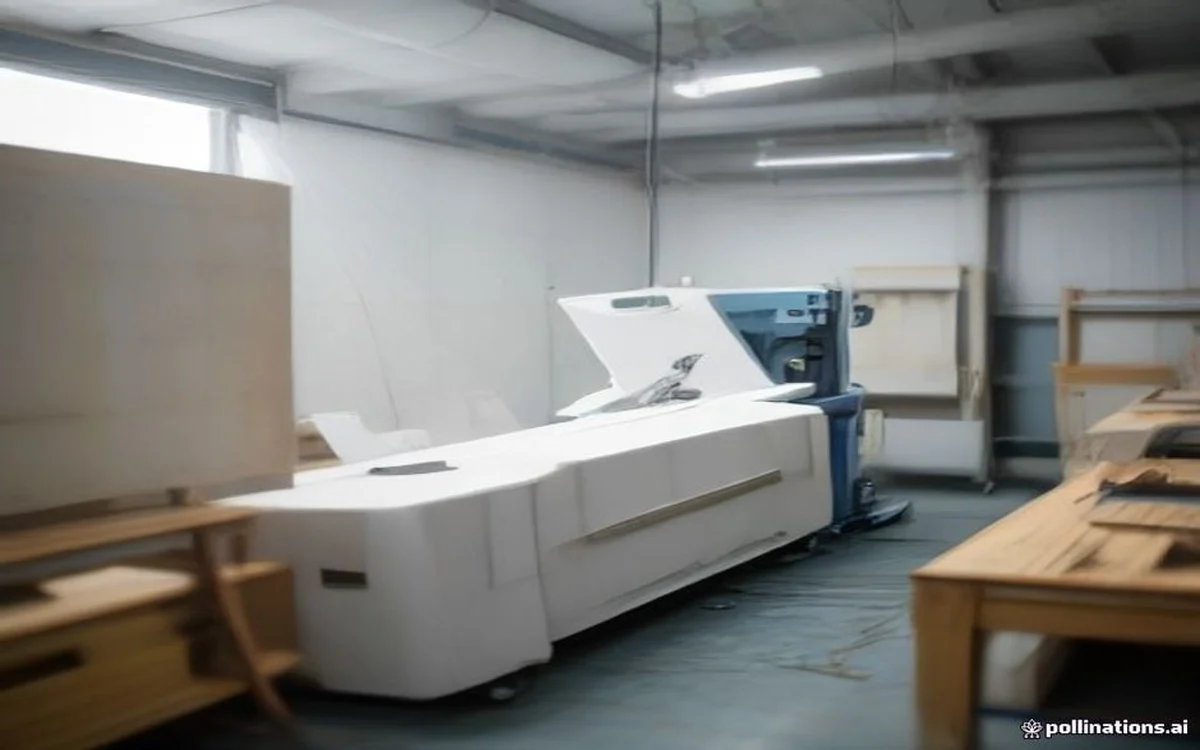
For an instrument workshop using connected machining, environmental monitoring or quality records, document where each application runs and how it exchanges data. Assess the proposed wireless connection against those actual workflows instead of assuming every production station requires the same network service.
Why Instrument Makers Are Turning to Fixed Wireless
Instrument plants are often split across wood shops, finishing rooms, assembly benches, and sound labs, and many still depend on patchwork copper and Wi-Fi that was never designed for machine data. Running fiber to every workstation means disruptive construction in areas that hold finished goods and tonewood with strict humidity requirements. An industrial 5G CPE delivers a carrier-grade uplink from a clean plant room or rooftop antenna, then serves workstations over structured cabling — cutting cost and lead time without disturbing controlled environments.
CNC Milling and Tonewood Machining
Necks, fingerboards, and carved tops are machined on multi-axis CNC centers that log spindle load, tool wear, and dimensional offsets continuously. When a router bit drifts, the correction has to reach the controller before a run of expensive tonewood is scrapped. A 5G FWA CPE with low latency and QoS keeps this closed-loop feedback flowing alongside production counts and SPC data, protecting yield on material where a single board can be worth more than the tooling that shapes it.
Varnishing Booths and Climate-Controlled Curing
Finishes are applied and cured in booths where temperature and humidity are monitored around the clock, because nitrocellulose and polyurethane coats will blush, orange-peel, or crack if the environment drifts. Sensors, spray controllers, and cure timers all need a stable uplink to synchronize with the batch record. A dependable fixed wireless connection ensures the booth never buffers or stalls, and dual-SIM failover means a carrier event will not freeze a curing cycle mid-batch and ruin a finishing run.
Acoustic Testing and Final Inspection
Every finished instrument passes through tap-testing, frequency-response analysis, and playability inspection before it ships. Those measurements are matched to the unit’s serial number and archived for warranty and brand consistency. Industrial CPE with high throughput and low jitter keeps acoustic records complete and instantly retrievable, so quality teams can trace any recurring defect back to a specific machine, batch, or finishing cycle and correct it at the source.
What to Look for in an Industrial 5G CPE
- Industrial temperature range and stable RF for plant rooms and rooftop antenna deployments.
- Dual-SIM failover to keep varnishing booths and acoustic labs online during carrier maintenance.
- Gigabit LAN and PoE to power cameras, sensors, and gateways without extra cabling.
- Centralized remote management (TR-069/TR-369) for multi-site fleet visibility.
- Carrier aggregation and 5G SA support for future-proof bandwidth headroom.
For musical instrument manufacturers modernizing their production networks, the right 5G FWA CPE turns connectivity into a clean, low-disruption utility that protects both precision machining and delicate finishing. Honlly Telecom supplies carrier-grade indoor and outdoor CPE engineered for high-precision, climate-sensitive industrial workloads — contact us to scope a fixed wireless deployment matched to your milling, varnishing, and acoustic testing environment.