
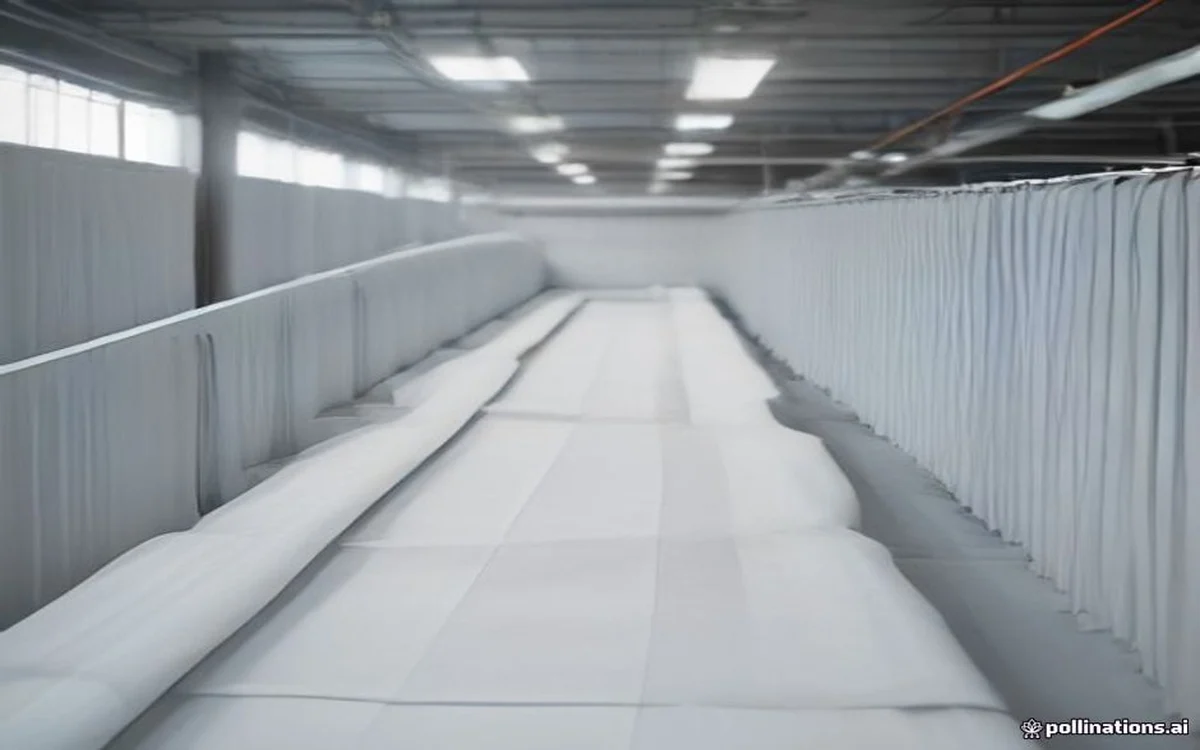
Textile and garment manufacturing has become one of the most automated industries on the planet, yet many plants still run their production networks on aging wired infrastructure that cannot keep pace with the data flowing from modern looms, cutting machines, and inspection systems. In 2026, forward-looking manufacturers are deploying 5G fixed wireless access (FWA) customer-premises equipment (CPE) as a rapid, resilient backbone for connected shop floors — and the results are reshaping how factories think about networking.
Why Textile Plants Are Retiring Legacy Wired Networks
Many mills and garment factories operate in industrial zones or leased facilities where laying fiber is slow, costly, or simply not an option. Leased lines can take weeks to provision and often deliver less bandwidth than modern production systems require. 5G FWA CPE changes the economics: a single industrial router can be installed in hours, delivering carrier-grade throughput over the cellular network without trenching or wayleave negotiations. For manufacturers expanding into new buildings or relocating lines, that speed-to-deployment is a decisive advantage.
Equally important is resilience. Textile plants cannot afford unplanned downtime on a line that produces thousands of garments per shift. A 5G FWA CPE with multi-WAN and automatic failover can keep production traffic flowing even when the primary connection degrades, giving plant managers a dependable primary or backup path that was previously impossible without redundant fixed circuits.
Connecting Automated Weaving, Cutting, and Sewing Lines
Modern textile operations depend on a continuous exchange of machine data. Automated weaving looms report warp tension, shuttle speed, and stoppage events; CNC cutting machines stream cutting patterns and blade diagnostics; sewing lines relay takt-time and defect counts back to supervisory control and data acquisition (SCADA) platforms. All of this traffic requires low-latency, high-reliability uplinks.
Industrial 5G CPE units bridge these machines onto the network, often through wired Ethernet and serial interfaces on the factory floor, then backhaul aggregated traffic over the 5G air interface. With support for VLAN segmentation and quality-of-service (QoS) policies, plant engineers can prioritize machine-control traffic over bulk data such as firmware updates or video, ensuring that a large file transfer never starves a production-critical message.
Real-Time Quality Control and Traceability
Quality control is where connectivity delivers visible ROI. Automated optical inspection systems capture high-resolution images of fabric and finished garments, comparing them against digital templates in near real time. Defects — a dropped stitch, a misaligned seam, a shade mismatch — are flagged instantly and logged against the batch, cutting waste and rework.
5G FWA CPE also underpins end-to-end traceability. From raw fabric rolls to finished cartons, manufacturers are attaching barcodes and RFID tags that must be scanned and synchronized to the cloud at every step. A reliable fixed-wireless connection keeps those scans flowing in real time, giving brands and retailers the supply-chain visibility they increasingly demand as part of compliance and sustainability reporting.
What to Look For in Industrial 5G CPE
Not every router is built for a textile environment. Buyers should prioritize industrial-grade hardware rated for dust, humidity, and vibration, with a wide operating temperature range and metal enclosures. External antenna support is critical for plants with dense racking, foil-backed insulation, or metal mezzanines that attenuate cellular signals.
Redundancy features matter too: dual-SIM support, multi-WAN failover, and out-of-band remote management keep connectivity alive and recoverable without a truck roll. Finally, security should never be an afterthought — look for IPsec and VPN passthrough, certificate-based device authentication, and secure remote-access tunnels so production networks stay isolated from the public internet.
For textile and garment manufacturers pursuing Industry 4.0, connectivity is no longer a back-office utility — it is the nervous system of the factory. Deploying the right 5G FWA CPE gives these plants a fast, resilient, and scalable foundation for automated production, real-time quality control, and full supply-chain traceability in 2026 and beyond.