
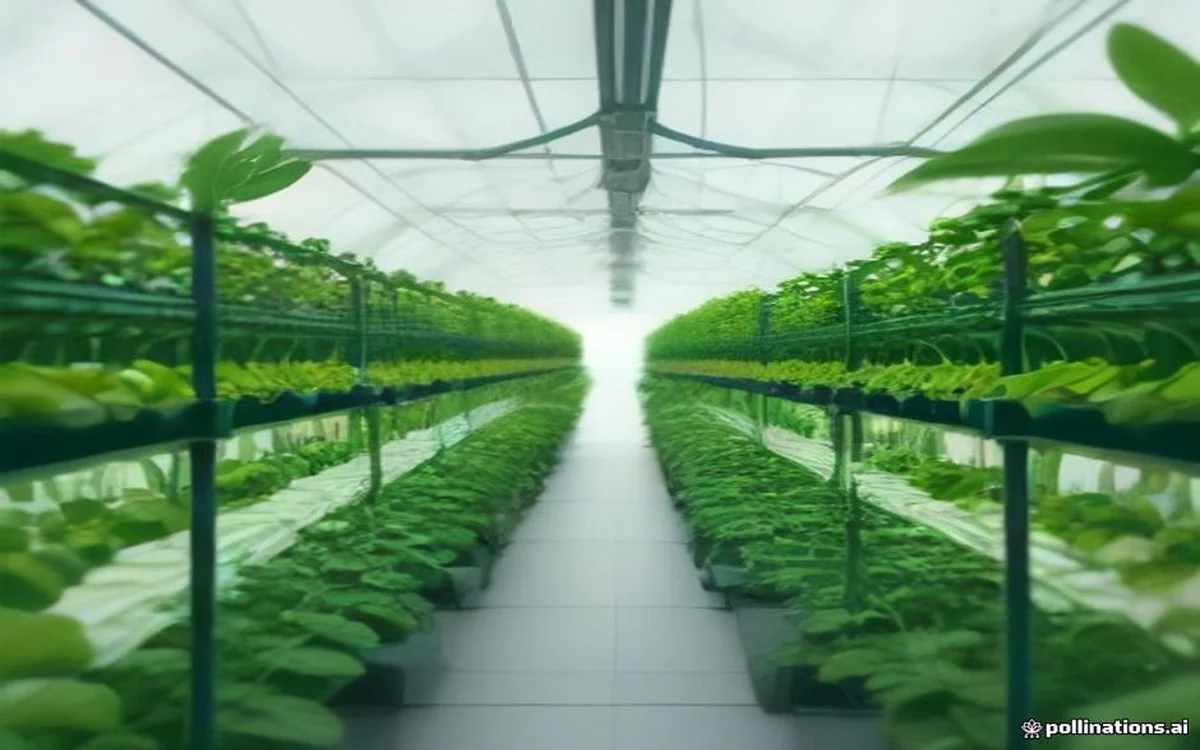
Commercial greenhouse operators and vertical farms are investing heavily in environmental automation, and the network layer underneath those systems is becoming a strategic priority. As controlled-environment agriculture (CEA) scales to meet year-round demand for fresh produce, growers need connectivity that keeps climate control, fertigation, and crop-sensing systems online without the cost and disruption of trenching fiber across glasshouses and multi-tier growing racks.
Why 5G FWA CPE Fits Controlled-Environment Agriculture
Greenhouses and vertical farms are often built on the outskirts of cities or in semi-rural zones where fixed-line infrastructure is thin. A 5G fixed wireless access customer-premises equipment (CPE) unit provides a fiber-class uplink in days rather than months, and it can be relocated as growers expand into new bays or facilities. For operators running dozens of sensors and actuators, the low latency and high uplink capacity of 5G also support real-time closed-loop control that older 4G links struggled to deliver.
- Rapid deployment — no trenching, permits, or wayleave delays.
- Portability — relocate CPE as facilities expand or crops rotate.
- Low-latency control — faster response for climate and irrigation loops.
- Network slicing — separate traffic for cameras, sensors, and SCADA.
What Greenhouse Operators Are Connecting
Modern CEA sites run a dense mix of endpoints that all converge on the CPE gateway. Climate-control systems monitor temperature, humidity, CO2, and light intensity; fertigation controllers dose water and nutrients precisely; and wireless sensor meshes report soil moisture and canopy conditions. On top of this, IP cameras watch for pests and intruders, while staff tablets and barcode scanners feed production and harvest data back to the cloud.
Deployment Considerations
Buyers should prioritize CPE rated for humid, dust-prone environments and wide operating temperatures. Dual-SIM failover keeps monitoring alive when a single carrier degrades, while VLAN segmentation separates operational technology from guest and back-office traffic. Support for VPN tunnels such as IPsec is essential for remote agronomy teams that need secure access to climate and dosing systems.
Outlook for 2026
As automation vendors standardize on IP-based controllers and growers adopt data-driven yield optimization, reliable wireless backhaul is becoming as important as the crop inputs themselves. 5G FWA CPE gives greenhouse and vertical-farm operators a future-proof edge that scales with every new sensor, camera, and automation node they add.